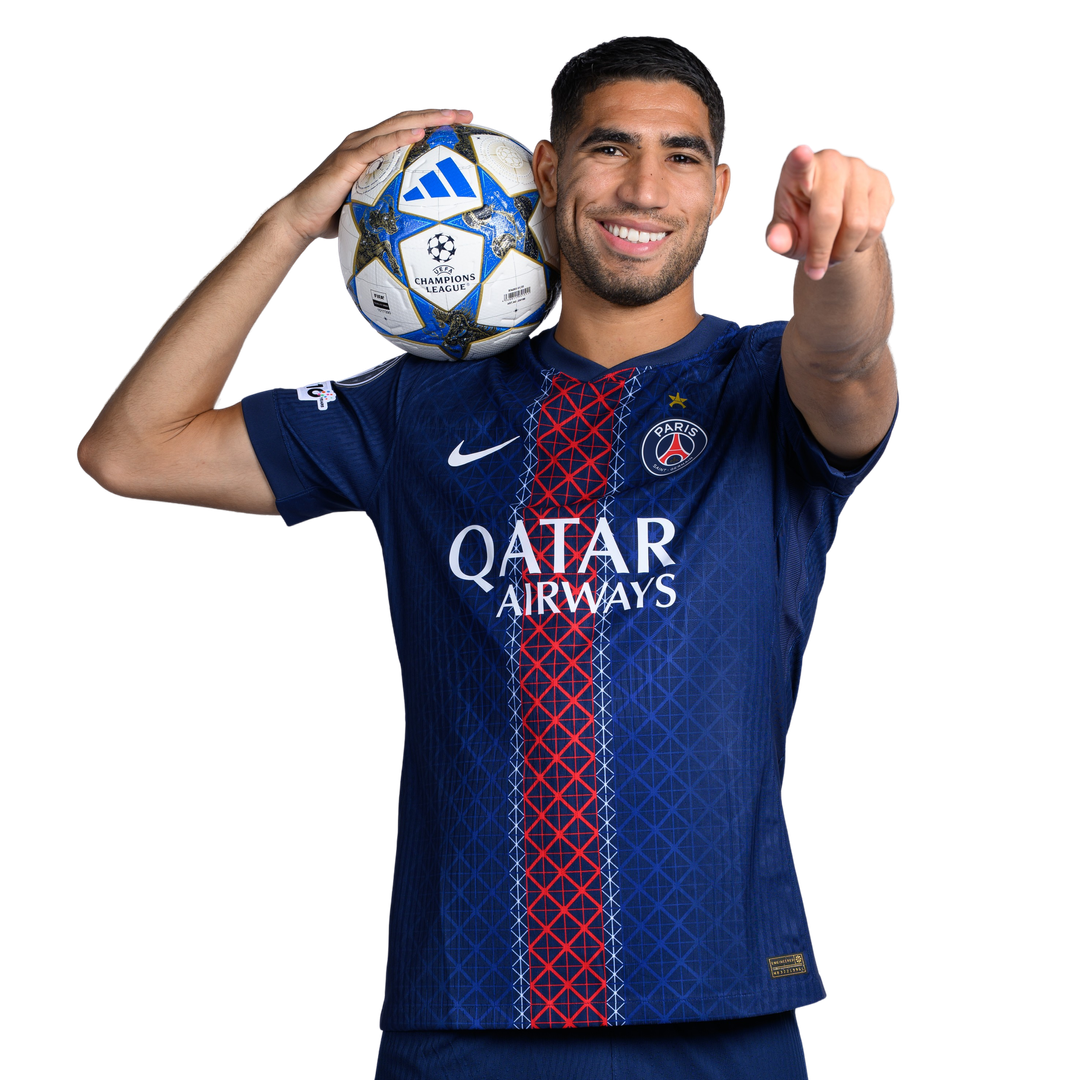
The scene was highly anticipated, almost monitored in real-time by fans. After several weeks of treatment in Paris, Achraf Hakimi arrived in Morocco to continue his rehabilitation alongside the Atlas Lions, bringing part of the PSG medical staff with him. It’s a powerful symbol: the Moroccan star is not just ‘joining the national team’, but transporting the structure designed to help him keep his promise to be present on December 21 for the opening match of AFCON 2025 against Comoros.
The story of this gamble began on November 4 during a Champions League match against Bayern Munich. After a foul on his ankle, Hakimi left the field injured. Initial diagnoses suggested a serious sprain, with an expected recovery time of six to eight weeks, casting doubt on his participation in the early AFCON matches. Quickly, analyses multiplied, ranging from pessimistic predictions to more nuanced scenarios. Morocco, relying on their right-back as the true metronome of their system, found itself hanging on medical reports from Paris.
As days passed, the situation clarified. Hakimi avoided surgery, followed an intensive treatment and strengthening program, and resumed running and ball work apart from group training at Camp des Loges. Images of his first exercises, with knee braces and visible taping, partially reassured Moroccan fans. The discourse from PSG staff was cautious, while the player’s entourage was much more optimistic. A phrase circulated in the hallways: “He will do everything to be there for kickoff in Rabat.”
The compromise reached highlights the stakes surrounding the player. Rather than staying in Paris until the last moment, Hakimi traveled to Morocco in advance, but accompanied by a medical staff sent by PSG. The official objective: to ensure continuity in his protocol while allowing him to acclimatize to the team, the climate, the pitches, and the specific demands of the coach. In practice, this arrangement underscores the unique status of the right-back, who is both an employee of a major European club, a leading figure for a generation of Moroccan players, and a serious contender for the African Player of the Year title.
Walid Regragui is clear in his statements: Hakimi remains central to his game plan. The coach emphasizes the exemplary nature of the player, “who hasn’t stopped working since his injury” and hopes for his presence from the first match. However, behind the confidence, the staff knows they are treading a fine line. A rushed return could carry a serious risk of relapse for a key player throughout the tournament and beyond for his club career. A delayed return would necessitate rethinking the dynamics of the right flank for at least one or two matches, with all that entails in terms of automatisms.
Tactically, Hakimi's potential absence is measured in multiple dimensions. First, the depth he brings on the right side, thanks to his ability to repeatedly make high-intensity runs, attack space, and shift play. Second, the quality of his foot in delivering crosses, set pieces, and quick transitions upon regaining possession. Finally, his relationship with the wingers and attacking midfielders occupying that flank has become one of the main levers for destabilizing opponents for the Lions. Morocco has backup options, including more defensive profiles capable of locking down the side and more offensive profiles from the local pool, but none possess all of Hakimi’s qualities. The game plan with him and the plan without him do not produce the same team.
Psychologically, the issue extends far beyond the starting eleven. Since the 2022 World Cup, Hakimi has become one of the most recognizable faces of the team, a locker room leader, and a symbol of boldness in play. Seeing him on the match sheet, even at 80%, sends a message to both opponents and fans: Morocco approaches ‘its’ AFCON with its main weapons. Conversely, an absence for the opening match against Comoros would inevitably fuel speculation about the team's true state, especially given that the Lions have maintained an impressive winning streak and arrive as the tournament's top favorites.
The political dimension of this situation is also relevant. The timing of Hakimi's return coincides with FIFA's decision to delay the date players can be made available by clubs, allowing them to retain their internationals until December 15. This delay reduces preparation time for all teams but creates a unique situation for an already recovering player: fewer collective sessions, more individualized work, and increased uncertainty regarding rapport with his teammates. For Morocco, this context reinforces the idea that AFCON 2025 will be determined as much in medical facilities and gyms as on the pitch.
In this balancing act, the final decision could lie between two extremes. Hakimi may start against Comoros, tasked with setting the tone early, but potentially replaced earlier than usual to limit strain. Alternatively, he could be benched, ready to come on in the second half if the scenario requires, to test his ankle in real conditions without imposing ninety minutes of high intensity. In either case, the chosen option will reveal something of how the Moroccan staff perceives the balance between protecting their key players and the immediate need for results.
The public has already made its choice on the essential matter. In café discussions and on social media, one idea prevails: it’s better to have a 100% Hakimi for the heart of the tournament than a burnt-out player in the group stages. However, the temptation to see him grace the pitch in Rabat on the opening night, in a packed stadium, is immense. The medical gamble initiated in early November has, thus, evolved into a question of sporting identity: can Morocco imagine starting ‘its’ AFCON without its star player, or does the image of Hakimi entering the field now form an integral part of this tournament’s narrative?
With twelve days to go before Morocco vs. Comoros, no definitive answer is yet known. What is certain, however, is that the tournament has already begun for Achraf Hakimi. Before even facing an opposing winger, he must win his duel against the clock, residual pain, and the legitimate caution of his club. If the gamble succeeds, his return to the highest level at the opening match could become one of the first highlights of AFCON 2025. Otherwise, Morocco will need to prove that its status as favorites is based on a complete team, and not just the physical condition of its right-back.