Egypt, a key but cautious player
Egypt remains the Arab state most directly concerned with any potential stabilization of Gaza. Cairo has one of the largest armies in the Arab world and a long history of mediating in Israeli-Palestinian affairs. However, sending a contingent into Palestinian territory would represent a highly sensitive decision, likely only accepted by Egypt under a clear, multinational mandate and international guarantees. Nevertheless, the need to secure the Rafah border and manage the humanitarian crisis might push it to take on a central, albeit limited, role.
Jordan, a strategic partner but politically exposed
Jordan has a professional military force experienced in UN peacekeeping missions. Its special forces and military police are among the most respected in the region. However, the internal political context—marked by a significant presence of people of Palestinian origin—makes its participation complex. Amman might provide medical, logistical, or command units, but justifying a combat engagement would be challenging.
Morocco, a credible candidate for a stabilization role
With its experience in UN missions in Africa and a strong, structured army regularly deployed in external operations, Morocco appears as a serious potential contributor. Rabat possesses valuable expertise in security, logistics, and military engineering. Diplomatically, Morocco maintains balanced relations with all parties, which would enhance the acceptability of its involvement in an Arab or international peace mission.
The United Arab Emirates and Qatar: Financial support and specialized capabilities
The UAE has modern units and significant coalition experience, particularly in Yemen. They could contribute to surveillance, intelligence, air transport, or command missions.
Qatar, heavily involved diplomatically in the Palestinian issue, could play a role in financial support and humanitarian coordination. Its military participation would likely be limited to non-combat units, but its political influence would be crucial.
Saudi Arabia, a possible role in a broader regional framework
Riyadh, which is rapidly modernizing its armed forces, could participate in funding, command, or strategic mentoring of a peacekeeping force. However, direct troop engagement on the ground remains unlikely without strong international backing. Saudi Arabia would prefer a multilateral Arab framework or a mission under UN or Arab League mandate.
Algeria and Tunisia: Limited but politically valued contributions
Algeria, politically engaged on the Palestinian issue, might offer symbolic or logistical support, but its geographical distance and non-interventionist military doctrine limit any real deployment in Gaza.
Tunisia could provide medical or humanitarian assistance, but its current military capabilities do not allow for a significant presence in a complex security environment.
What format for an Arab force in Gaza?
Three scenarios are generally discussed in diplomatic talks:
– a multinational Arab contingent led by a few major states (Egypt, Morocco, UAE);
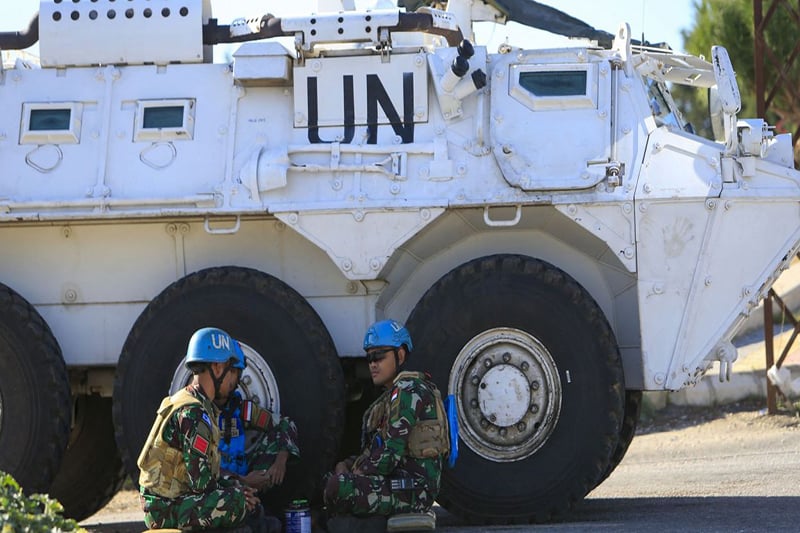
– a mixed UN + Arab League mission, akin to other hybrid operations;
– a non-combatant Arab force focused on civil policing, engineering, humanitarian aid, and securing routes.
The determining factor remains the political question: no Arab state will deploy troops to Gaza without a clear mandate, international guarantees, and a credible roadmap for reconstruction and governance.