
Morocco likes to present itself as a country without oil but with ideas. In industry, this translates into a discreet method: no grand five-year plan dubbed 'Marshall' or 'Vision X,' but a series of targeted decisions aimed at investors, backed by advantageous geography and active trade diplomacy. By 2025, the outcome is visible primarily in three interrelated sectors: tires, automotive, and port logistics.
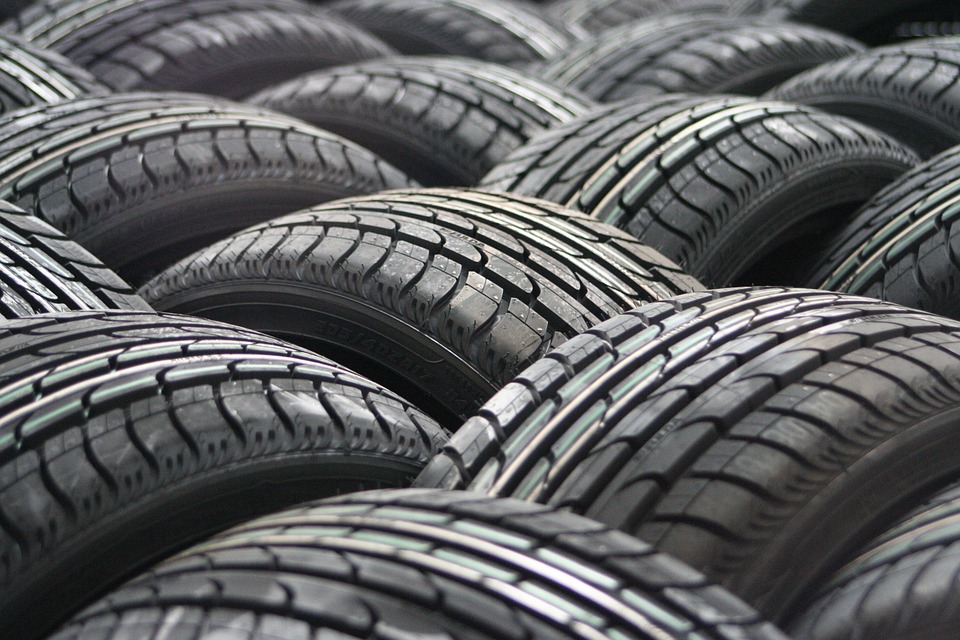
In the tire sector, the shift is remarkable. In Tangier, a large Chinese tire factory was built in record time, with an annual production capacity of several million tires for the passenger segment. The site is set to ramp up, with further investments planned to increase volumes and make Morocco a pillar of the group's global production. The location was not chosen randomly: the proximity to Tangier Med reduces logistics costs and directly connects the production chain to European and African markets.
Further east, in the Oriental region, another major industrial project is underway around a free zone near Nador West Med. Once again, the goal is to produce millions of tires for export, taking advantage of a new deep-water port and available land. In just a few years, Morocco is transitioning from being a mere importer to a regional production platform for tires, linked to both the European market and African growth. The selection of these port sites shows that logistics is not merely a backdrop, but the backbone of the model.
On the automotive side, the momentum is already well established. The Kingdom has become the leading vehicle producer in Africa, with a capacity nearing one million units per year. Automotive exports now far exceed those of other industrial sectors, with an increasing rate of local integration over the years. Tens of thousands of jobs have been created, and numerous local or international suppliers have clustered around assembly plants.
This trajectory is experiencing a new acceleration with recent announcements from major manufacturers increasing their capacities in Morocco, particularly in the small car segment and electric or hybrid vehicles. In Kenitra, a factory is expected to more than double its production and raise the share of Moroccan suppliers in the value chain even higher. In parallel, projects in automotive electronics, batteries, and safety components aim to anchor more engineering and technology locally.
Tangier Med plays a pivotal role here. The port complex has become one of the Mediterranean region's most important transshipment hubs, with logistical and industrial platforms housing hundreds of companies. Cars produced in the region, spare parts, tires, and a multitude of manufactured goods transit there before being redistributed to Europe, America, or sub-Saharan Africa. The adjacent industrial zones have been deliberately designed to attract activities such as assembly, packaging, and value-added logistics.
The overall architecture is clear. In Tangier, cars are assembled, tires are manufactured, parts and finished products are stored, and then shipped via one of the region's most efficient ports. In Kenitra and Casablanca, thermal and electric vehicles are produced to supply several markets. In Nador, an industrial hub is taking shape around a new deep-water port destined to become a second logistical pillar. Each time, the logic remains the same: to be as close as possible to port hubs, free zones, and free trade agreements to transform the territory into a platform rather than just a market.
However, this movement has not been accompanied by a unified political narrative. There is no single document that would consolidate, under one banner, the rise of tires, automotive, and logistics. It is a series of investment contracts, agreements signed with the state, tax incentives, and economic diplomacy focused on Europe, China, and the Gulf that collectively produce this leverage effect. The official discourse emphasizes industrial sovereignty and job creation, but allows multinationals significant leeway in organizing value chains.
This approach has advantages. It allows for rapid adjustments in supply to meet the needs of major global groups, avoids the showcase effects of overly rigid plans, and capitalizes on the country's geographic position to capture reconfigurations of flows, especially since recent logistical crises. Tangier Med, often described as a 'tool' in service of this strategy, is the most visible illustration: a port, but also a set of zones that adapt to the needs of industries.
It also carries risks. The lack of a clear public plan makes discussing the required trade-offs more difficult: concerning the environment, training, local skill development, or working conditions. Dependence on a few key sectors, such as automotive, tires, and logistics, exposes the country to sectoral shocks and decisions made abroad. The bet on international capital requires maintaining a highly competitive business climate, particularly as several African or Mediterranean countries offer similar proposals.
Despite these vulnerabilities, one fact stands out: the tires produced in the factories of Tangier or the Oriental region, the cars made in Kenitra and Tangier, the containers loaded at Medhub tell a single story. That of a country that has chosen, without grand proclamations, to be a regional workshop in the global industry. A workshop where it is no longer just about assembly, but also about manufacturing, designing, and optimizing flows. A regional industrial hub built step by step, without an advertised Marshall Plan, but with a strategic coherence that time and figures make increasingly difficult to ignore.