
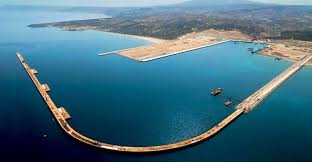
Nador West Med: how Morocco scales up its port, industrial, and energy capabilities
Under the presidency ofMohammed VI, the Kingdom methodically continues to build a long-term logistics and industrial power. The Nador West Med, which was the focus of a royal working meeting held on January 28, 2026, at the Royal Palace in Casablanca, exemplifies this approach. More than just a new port, it represents a strategic change in scale, continuing directly from the model inaugurated by Tangier Med.
As it nears its operational launch scheduled for the last quarter of the year, Nador West Med emerges as a structural link in the royal vision to sustainably connect the Moroccan economy to global value chains. The message is clear: Morocco is no longer content to be a transit platform; it aims to become a central player in logistics, industry, and energy at both regional and international levels.
The international success of Tangier Med has served as a model. As the first port in Africa and the Mediterranean, it demonstrated that a port infrastructure designed as an ecosystem can sustainably transform an economy. Nador West Med now completes this national framework, not by duplication, but by strategic expansion, especially along the eastern Mediterranean coastline of the Kingdom.
Initially designed as an integrated project, the complex is built on a close integration of port, industry, logistics, and energy. The major port infrastructures are now completed, reflecting a controlled rise in capacity. The concession contracts for the container terminals, already signed, mark the transition from construction to operational phase, confirming the credibility of the announced timetable.
However, one of the most structural aspects of the project goes beyond the mere port dimension. With the establishment of the first liquefied natural gas station in Morocco, Nador West Med becomes a central tool of national energy sovereignty. In an international context marked by instability in energy markets, this infrastructure positions the Kingdom proactively to secure its supplies while supporting its energy transition.
The announced capacities reflect this ambitious intent. From its entry into service, the port will be able to handle several million containers and tens of millions of tons of goods. Ultimately, the progressive expansion of the complex will allow it to reach volumes comparable to major international hubs, confirming Morocco's desire to compete on a global scale.
Surrounding the port, industrial and logistics zones are already attracting international players. The confirmed private investments, amounting to tens of billions of dirhams, highlight a key element often underestimated: trust. Trust in Morocco's institutional stability, in the clarity of its strategic vision, and in its ability to deliver complex projects on time.
However, the royal perspective on the project extends beyond economic indicators. During this meeting, emphasis was placed on employment, training, and the integration of youth. The port is not envisioned as a technological enclave disconnected from its territory, but as a lever for regional transformation, destined to benefit the entire area of influence. Specialized training programs, urban development support, and territorial development are integral parts of the equation.
Through Nador West Med, Morocco asserts a coherent vision: heavy, integrated infrastructures, connected to the world but anchored locally. In an increasingly fragmented international environment, the Kingdom takes the opposite approach: that of managed openness, upgrading, and strategic projection.
Nador West Med is therefore not just a new port. It is a signal, directed to investors, international partners, and global markets: Morocco continues its trajectory with consistency, ambition, and method.