A Maghreb history, a major anchoring in Fes
The Tijaniyya, also called tariqa tijania or Tidjaniyya, is among the great Sufi paths of Muslim Africa. Its history sheds light on the ancient links between the Maghreb, the Sahara, and West Africa. At the heart of this network is Fes, where its founder, Sidi Ahmed al-Tijani, rests, and where followers from Senegal, Mauritania, and other African countries have gathered for generations.
Discussing the 'Moroccan sources' of the Tijaniyya requires historical precision: its founder was not born in Morocco, and the spiritual narrative of the emergence of the path identifies a decisive moment in present-day Algeria. Morocco plays a central role in the master's formation, his permanent establishment in Fes, the establishment of his zaouia, and the transmission of his legacy.
Ahmed al-Tijani: from Aïn Madhi to the Great Roads of Knowledge
Ahmed al-Tijani was born around 1737-1738 in Aïn Madhi, a locality today located in Algeria, near Laghouat. A Muslim scholar and seeker of spiritual paths, he traveled between various centers of learning in the Maghreb and made a journey to the East and the holy places of Islam. Fes was part of this intellectual and religious itinerary long before he established himself there permanently.
According to the tradition of the brotherhood, he received a special spiritual authorization in the 1780s in Abou Samghoun (Boussemghoun), linked to a vision of the Prophet Muhammad. This is a faith narrative transmitted by Tijani sources, rather than an event verifiable by ordinary historical methods. Scholars generally locate the birth of the path during this period, albeit with divergences regarding the exact dates and stages.
Why Fes Becomes the Heart of the Tijaniyya
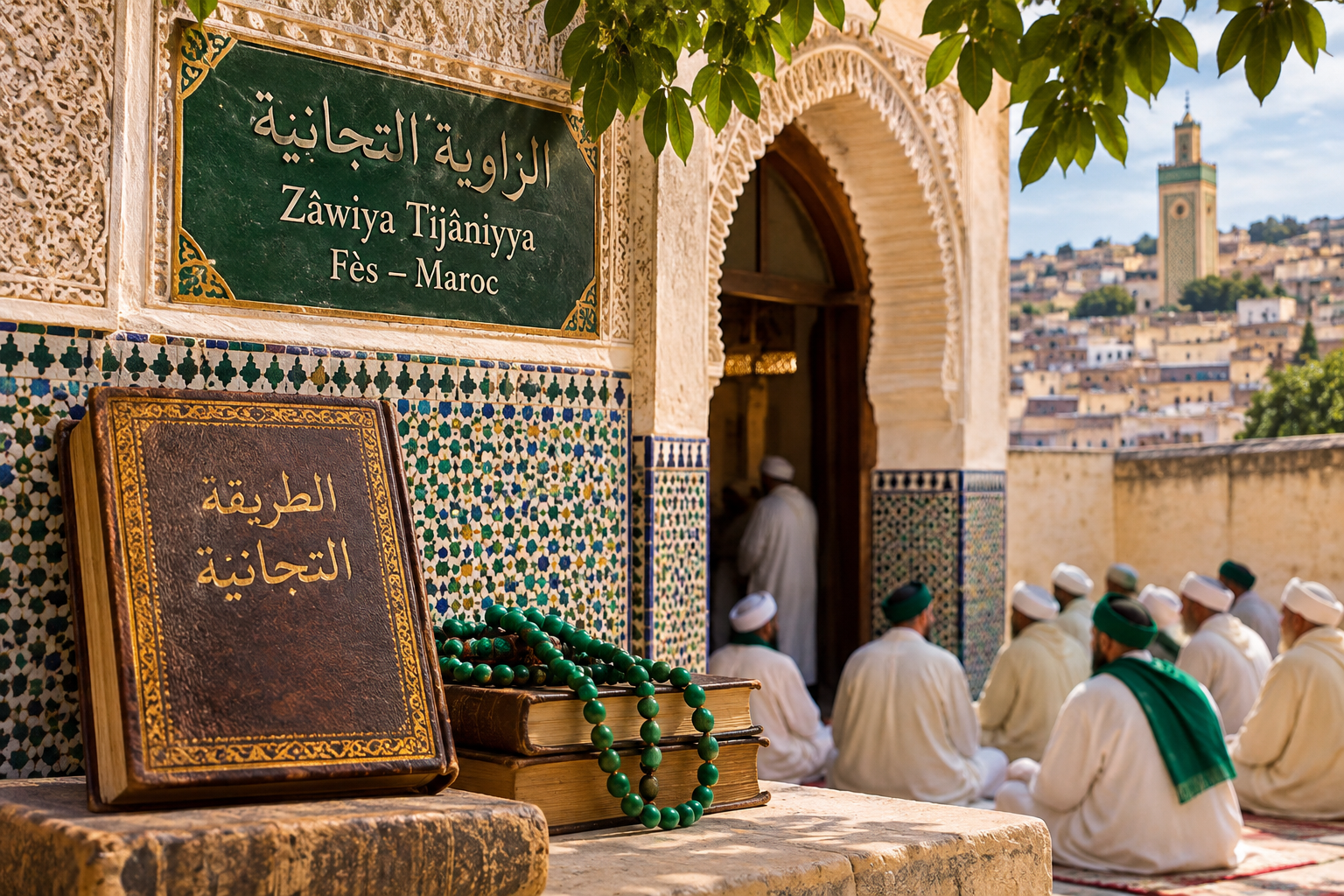
At the end of the 18th century, Ahmed al-Tijani settled in Fes, often dated to 1798 in scholarly works. At that time, the city was a center of Islamic scholarship and trans-Saharan exchanges. He established a zaouia in the medina, near the intellectual center of Qarawiyyine. Upon his death in 1815, he was buried there: the zaouia gradually became a reference sanctuary for his disciples.
This establishment is decisive. It gives the brotherhood a place of memory, a space for transmission, and a meeting point for communities spread across several countries. The fact that Fes houses the founder's tomb explains the city's unique status in the tijani religious geography, without implying that all branches of the brotherhood are administratively dependent on Morocco.
The Role of Sultan Moulay Slimane and the Moroccan Scholarly Community
Historical studies highlight the relationships Ahmed al-Tijani maintained with the Sherifian power under Sultan Moulay Slimane (1792-1822). The welcome afforded to the master in Fes and the protections his community benefits contributed to the grounding of the path in the Kingdom. The terms of this relationship and the evaluations of competing brotherhoods must be understood within the political and religious context of the time.
Thus, the Tijaniyya develops in a Morocco where zaouias participate in the life of education, sociability, and the circulation of knowledge. In the 19th century, Moroccan figures and establishments outside Fes contributed to the dissemination of the path, particularly towards Marrakech and the Souss. Its Moroccan history, therefore, exceeds the mere fassi mausoleum.
From Morocco to Senegal, Mauritania, and West Africa
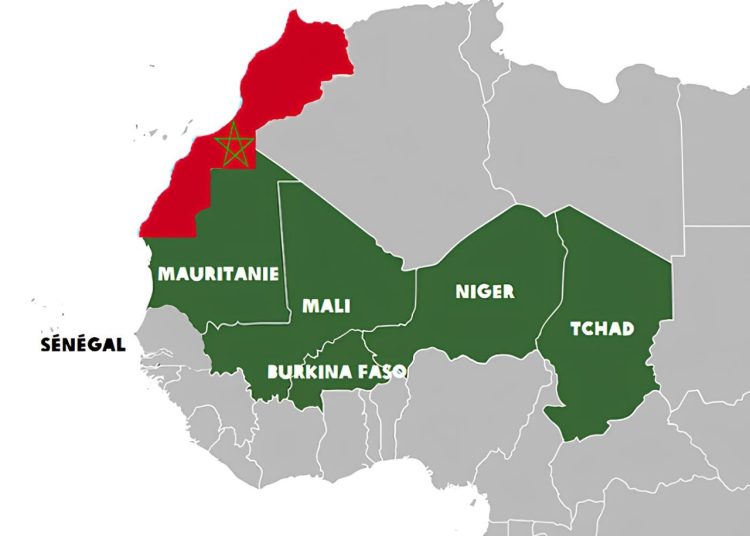
Exchanges between Fes and West Africa give the Tijaniyya a transnational dimension. Mauritanian transmitters, including Muhammad al-Hafiz, played an early role in spreading the path to south of the Sahara. In Senegal, several lineages and religious centers then contributed to its expansion, while figures like El Hadj Malick Sy and Ibrahim Niasse have left a lasting mark on its West African history.
These relations are not limited to a one-way diffusion. African masters and disciples develop their own teachings, networks, and institutions. Visits to Fes, exchanges of religious authorizations, study trips, and family or commercial ties sustain a shared spiritual space between Morocco and West Africa.
The ziyara in Fes: a spiritual fidelity that has become a human bond
Visiting the mausoleum of Ahmed al-Tijani, known as ziyara, is a significant practice for many followers. Research by Johara Berriane shows how this visit has evolved with changes in transportation and mobility between Senegal, Morocco, and Europe. It combines devotion, community gatherings, commerce, and sometimes diplomatic stakes.
It is important to distinguish this ziyara from the canonical pilgrimage to Mecca, which falls under the religious obligations of Islam for those capable of undertaking it. However, for Tijani adherents, Fes retains an exceptional symbolic value. This influence places Moroccan spiritual heritage at the heart of an ancient and vibrant African dialogue.
A Moroccan and African Heritage to Be Understood without Shortcuts
The trajectory of the Tijaniyya cannot be reduced to a birthplace or an exclusive national claim. Aïn Madhi and Boussemghoun belong to the genesis of the founder and the narrative of creation of the path; Fes constitutes his place of establishment, burial, and one of its main centers of influence. The major Senegalese centers and other African communities have, in turn, deeply shaped its development.
For Morocco, this heritage represents a treasure of knowledge, spirituality, and human relations that transcends borders. Understanding the Tijaniyya means understanding why Fes continues to hold a special place in the religious memory of millions of faithful, without overshadowing the other lands and actors of its history.