For several years, Morocco has established itself as a key player in African diplomacy. But with the launch of theRoyal Initiative for the Atlantic Coast of Africa, the Kingdom is taking a major step towards asserting its geostrategic leadership in the Atlantic space, which is now central to its political, economic, and security vision.
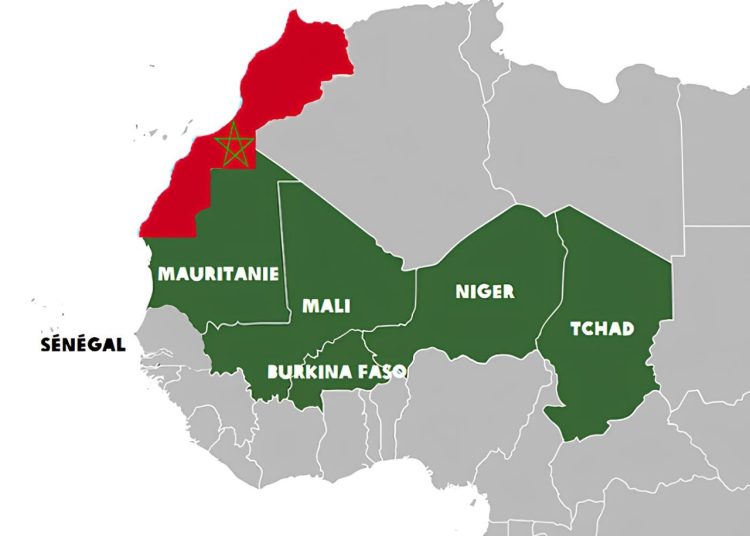
This initiative, announced by King Mohammed VI and followed by high-level diplomatic meetings, aims to provide landlocked West African countries—such as Mali, Niger, Burkina Faso, and Chad—with sovereign access to the Atlantic Ocean through modern Moroccan infrastructure.
This ambition goes beyond mere economic considerations: it seeks to rethink the map of African cooperation by positioning thesea as a driver of sovereignty and solidarity.
A project that is economic, diplomatic, and symbolic
Morocco understood early on that controlling maritime routes is a leverage for power in today’s world. The Atlantic currently represents a strategic route for energy, food, and digital exchanges.
With ports likeTanger Med, Casablanca, Safi, Agadir and soonDakhla Atlantic, the Kingdom has one of the continent's most efficient Atlantic coasts.
But the project aims even higher: it includes the construction oflogistical corridors and integrated infrastructureconnecting Morocco to the Sahel, including roads, free trade zones, pipelines, and fiber optic cables. The gas pipelineNigeria–Morocco, stretching over 5,600 km, illustrates this vision of a unified and sustainable African energy network.
Symbolically, this initiative reflects a unique Moroccan approach: that of an African country whichdoes not settle for rhetoric of solidarity, but actively works for the continent's development.
A clear geopolitical vision: to make the African Atlantic an area of stability
As several regions around the world experience rising maritime tensions, Morocco offers an alternative based on cooperation and co-determination.
The Kingdom bets on adiplomacy of stability, where dialogue, maritime security, and combating trafficking are common priorities.
This strategy also strengthens Morocco's position within international forums. From Washington to Brussels, passing through Abuja and Dakar, the Moroccan discourse gains coherence: it is about building a strong, autonomous Africa that is open to the world and anchored in its Atlantic coastline.
Expected Benefits for Morocco and the Continent
In the long term, the Atlantic Initiative could transform Morocco into acrucial economic and diplomatic platformbetween West Africa and the rest of the world.
The prospects are immense: development of port areas, logistical attractiveness, the rise of South-South trade, and opportunities for Moroccan companies in engineering, finance, and energy.
For Sahel countries, access to the sea also means opening up to global markets, reducing logistical costs, and increasing supply security— a decisive step toward regional economic sovereignty.
A Geostrategic Course Asserted
With this initiative, Morocco confirms that it no longer passively endures geopolitical balances, but instead, itinfluences them..
The African Atlantic space becomes a laboratory for a new regional order where the Kingdom assumes the role of a stabilizing power, balancing African vision, international openness, and pragmatic diplomacy.
By combiningblue economy, regional connectivity, and shared security, Morocco positions itself as the beating heart of a vibrant African Atlantic.