A garment at the heart of Moroccan urban refinement
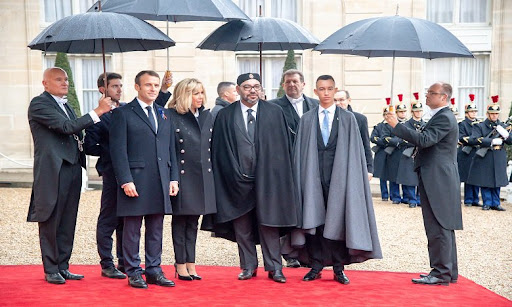
The Moroccan selham, a long cape without a hood, is one of the most emblematic traditional garments of the kingdom. Unlike the bournouss of Amazigh origin, rustic and mountainous, the selham is rooted in anurban, style that emerged in the ancient imperial capitals such as Fez, Rabat, Meknes, and Marrakech.
Its elegance lies in its minimalist cut: a wide cape draped over the shoulders, ample yet fluid, which gives the wearer a noble and distinguished silhouette.
Makhzen origins and Arab-Andalusian influences
The appearance of the selham dates back to the Saadian and Alaouite eras, times when Morocco refined a style of dress inspired by:
-
Andalusian court garments,
-
elite cloaks from the Arab Muslim world,
-
the Moroccan tradition of modesty and majesty.
Quickly, the garment became associated with the Makhzen, the Moroccan state apparatus, its officers, scholars, and dignitaries.
Thus, the selham became synonymous with authority, respect, and prestige.
A strictly masculine dress identity
Unlike the haïk or the caftan, the selham is traditionally reserved for men. It serves as ceremonial attire worn during:
-
religious ceremonies,
-
official events,
-
national holidays,
-
weddings, and solemn receptions.
Its cut, sober and majestic, reinforces the notion of protocol gravity, while its materials — often fine wool, luxurious fabric, or selected weaves — testify to Moroccan artisanal quality.
The fundamental difference with the bournouss
The two garments are sometimes confused, but they are distinct:
-
The bournouss : a wool cape with a hood, of Amazigh origin, historically used by mountain dwellers.
-
The selham : a cape without a hood, urban, refined, associated with notables and official circles.
This distinction is not superficial: it reflects two different cultural worlds — the rural and mountainous on one side, the urban, literate, and makhzénian on the other.
Symbols and codes of prestige
Wearing the selham means embracing a set of values:
-
social prestige, as it distinguishes the elites;
-
sobriety, as it imposes a noble appearance without extravagance;
-
heritage, as it represents the continuity of Moroccan ceremonies;
-
identity, as it evokes great dynasties and royal traditions.
Colors play an important role:
-
black, and gray dominate official events, white
-
and ivory are reserved for religious or spiritual celebrations, while deeper shades mark special occasions.A garment spanning generations
-
Many Moroccans continue to wear the selham during weddings, religious gatherings, or Aïd celebrations.
In major cities, it often accompanies the male djellaba or jabador, completing an elegant traditional outfit.
Its presence in official ceremonies has reinforced its status as a
national garment
, symbolizing Morocco's continuity between tradition and modernity.The selham in the contemporary sceneToday, the selham inspires:
Moroccan designers who modernize its cut,
international creators fascinated by the Moroccan silhouette,
-
cinematic and documentary productions dedicated to national heritage.
-
The traditional cape thus becomes a
-
bridge between makhzén heritage and modern creation
, a cultural signature that transcends time.A discreet yet powerful symbol of Moroccan eleganceThe selham is one of the few Moroccan garments still worn in a strictly official context, reinforcing its almost institutional dimension.
It highlights the importance of dignity, presence, and continuity in Moroccan traditions — a garment that carries a thousand years of history without embellishment.
:
: