An art born from the deserts, plains, and mountains of Morocco
Fantasia, or 'tbourida', is one of the oldest heritages of Morocco. Its roots delve into the culture of Amazigh and Arab tribes that have long shaped the country's history.
Originally, tbourida was a simulation of military charge: a show of power intended to impress neighboring tribes, protect territories, and celebrate the bravery of warriors.
This spectacle, which became a ritual, has traversed centuries without losing any of its symbolic strength.
The horse, at the heart of Moroccan identity
Morocco has an exceptional relationship with the horse dating back to antiquity.
Tbourida features the Barb horse, a robust and noble breed known for its courage and disciplined temperament.
In Moroccan tradition, the horse symbolizes:
-
freedom,
-
prestige,
-
warrior pride,
-
social success.
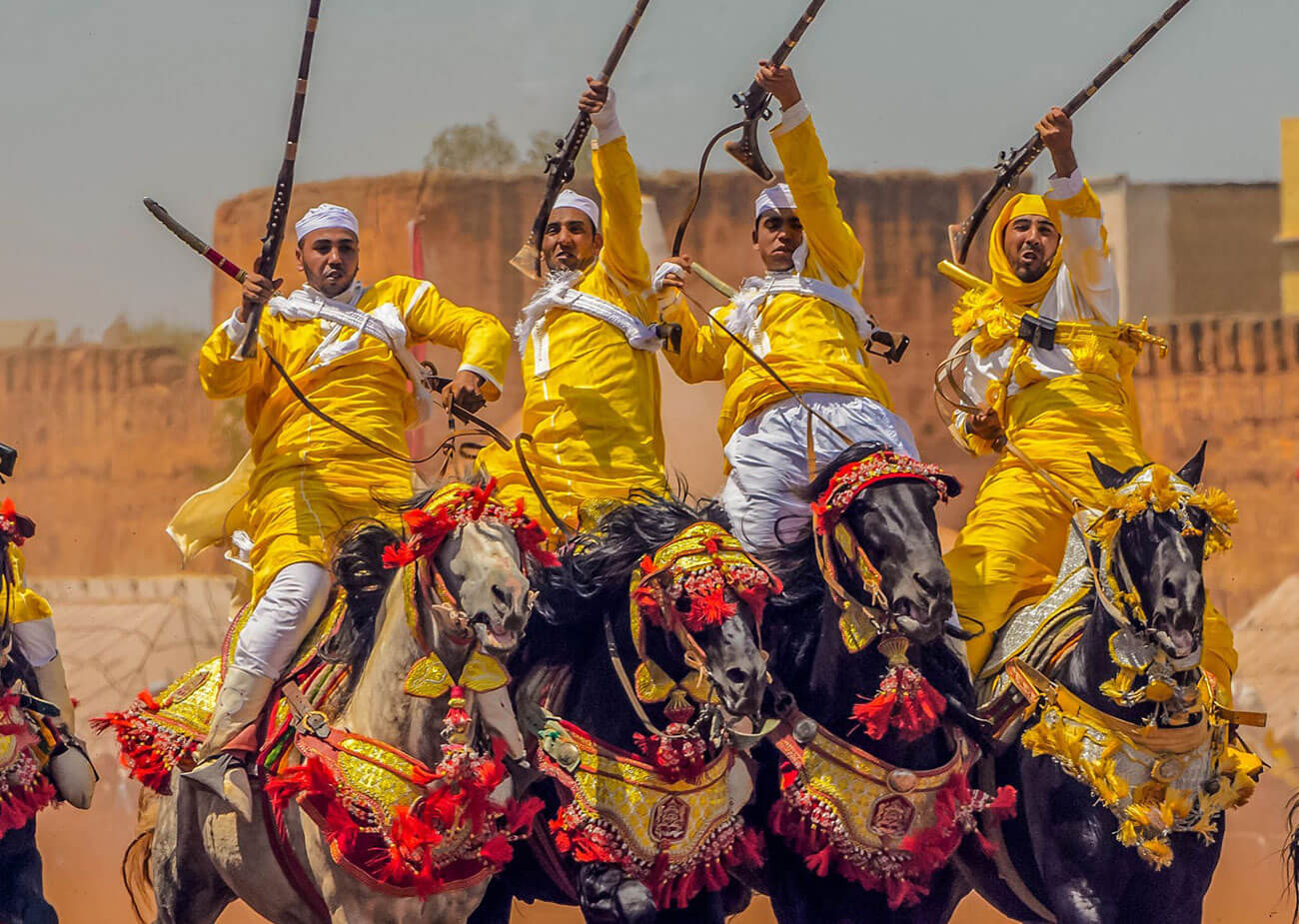
Each 'sareh', or horse of fantasia, is meticulously prepared: braids, embroidered adornments, crafted saddles, and hand-stitched patterns that showcase Moroccan artisanal refinement.
The sorba: a perfect synchronization

A tbourida team is called a sorba. It is led by a 'moqaddem', an experienced chief responsible for:
-
coordinating the run,
-
giving the starting signal,
-
ensuring synchronized shots,
-
ensuring safety.
The sorba can consist of between 10 and 30 riders, each wearing traditional outfits suited to their region: gandoura, turban, embroidered belt, and ancient weapons.
The stages of the ritual: a martial choreography
Fantasia is not just a simple race; it follows a precise sequence:
-
Alignment: the riders position themselves shoulder to shoulder, the hooves of the front row perfectly aligned.
-
Building momentum: horses and riders advance at a walk then accelerate together.
-
The charge: the sorba gallops in a straight line, in perfectly synchronized movement.
-
The tcharga: the culminating moment when all riders simultaneously fire toward the sky with their 'moukhalas'.
-
The abrupt stop: horses come to a sudden halt, demonstrating exceptional discipline.
The technical difficulty is immense: a shot taken too early or too late disrupts the harmony of the sorba and can be dangerously penalized.
A deeply spiritual tradition
Tbourida is not just a physical spectacle: it is a ritual loaded with meaning.
It evokes:
-
blessings,
-
tribal pride,
-
warrior ancestors,
-
community solidarity.
Before each performance, many sorbas perform prayers or call for divine protection to ensure the success of the charge.
The moussems: the beating heart of tbourida
Most fantasias take place during moussems, religious or agricultural celebrations gathering thousands of people:
-
Moussem of Moulay Abdellah (El Jadida),
-
Moussem of Sidi Bennour,
-
Moussem of Tan-Tan,
-
Amazigh moussems of the Middle Atlas…
These events transform tbourida into a genuine popular festival where ahwach music, souks, crafts, and culinary traditions blend together.
International recognition
In 2021, UNESCO inscribed tbourida on the Representative List of the Intangible Cultural Heritage of Humanity.
This recognition confirms the essential role of fantasia in:
-
the transmission of equestrian skills,
-
the preservation of tribal traditions,
-
the enrichment of Moroccan culture.
It highlights the work of saddlers, trainers, farriers, embroiderers, and all those who contribute to this ritual.
Fantasia in the 21st century: between tradition and modernity
Today, far from being static, tbourida continues to evolve:
-
increased participation of female riders,
-
national competitions organized by the FRMSE,
-
improved safety for riders,
-
modernization of infrastructures.
Moroccan equestrian schools now train young enthusiasts, ensuring the continuity of this extraordinary art.
A living heritage that embodies Moroccan pride
Tbourida has not lost any of its strength.
With each synchronized shot, each thundering gallop, an entire history — that of profound, tributary, and indomitable Morocco — is revived.
It embodies transmission, bravery, and unity: a spectacle that has become a national symbol.