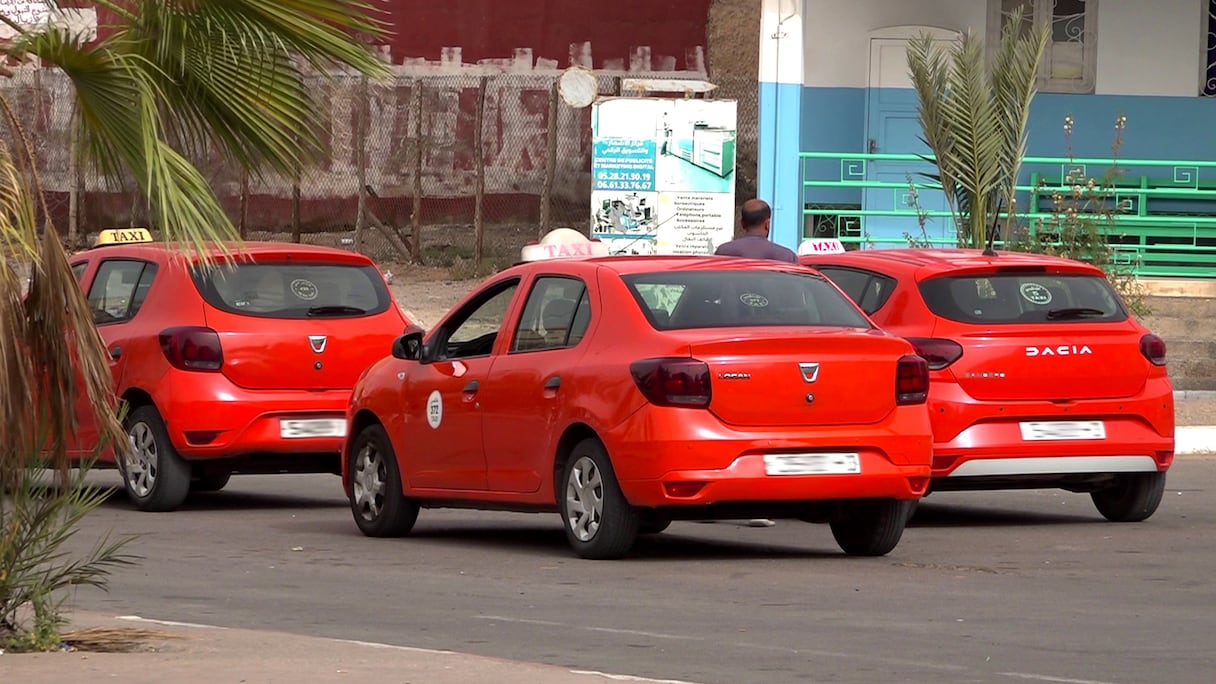
Small Taxis in Morocco: An Essential Service Yet Increasingly Criticized
A Symbol of Urban Transport in Crisis
In Casablanca, Rabat, Fes, and Tanger, small taxis traverse the streets day and night. They represent one of the cornerstones of urban transport in Morocco, especially for short trips or in the absence of effective public transport.
But for several years, user dissatisfaction has been steadily increasing. On social media and in everyday conversations, testimonies denouncing abuse, refusals, or inappropriate behavior are proliferating.
Refusal of Service: The Main Complaint
This is undoubtedly the most common issue. In most major cities, small taxis regularly refuse to take passengers, claiming the destination is too short, too far, or simply inconvenient for them.
In Casablanca, for instance, many residents report that drivers refuse to go to certain outlying areas, deemed unprofitable.
"Sometimes, it takes over 20 minutes to find a taxi that will agree to go to Derb Ghallef or Aïn Sebaâ," shares a resident of the metropolis.
This practice, although illegal by urban transport regulations, remains difficult to control due to a lack of personnel and real sanctions.
Arbitrary Fares and Absence of Meters
Another recurring issue: the lack of use of the meter.
In Rabat or Marrakech, it is not unusual for drivers to impose a flat fee, often higher than the regulated price.
"The meter is there, but it serves no purpose. Some drivers prefer to negotiate before we even get in," laments a user.
Consumer associations denounce the price ambiguity perpetuated by the lack of control. In some cities, the introduction of digital meters has improved the situation, but the phenomenon remains widespread.
Aging Vehicles and Safety Concerns
Many small taxis still operate old models, often poorly maintained, without air conditioning or minimal comfort.
Some users also complain of dangerous behaviors: speeding, risky overtaking, or disregard for traffic laws.
"Sometimes we fear getting in, especially at night," admits a student in Fes.
Drivers, however, explain this situation by low income and high maintenance costs.
"With what we earn, it's hard to change cars or make timely repairs," admits a Casablanca driver.
A Fragile and Poorly Regulated Profession
Behind these dysfunctions lies a system that shows its limits.
Small taxis operate under a regime of authorizations (“licences”) that are often issued opaquely, and which drivers do not always own.
The result: many drivers work on a daily basis and pay a fee to the licence holder, without stable social protection.
Unions denounce this precariousness and have long called for a comprehensive reform of the sector, to professionalize the activity and introduce a more transparent model.
Emerging Alternatives, But Change Is Slow
In the face of these problems, new solutions are emerging:
Local ride-hailing apps (such as Roby, Heetch, or Yassir) are beginning to appeal to some city dwellers.
Some cities are experimenting with hybrid or electric small taxis that are more ecological and better equipped.
Local authorities are considering digitizing the sector, with vehicle geolocation and fare tracking.
But these initiatives remain marginal compared to the daily reality of users.
A Long-Awaited Reform
The Ministry of Transport has repeatedly promised to modernize the legal framework governing small taxis, but few concrete measures have yet been applied.
Citizens, in turn, hope for real change: more discipline, safety, and respect.
"We don't want to eliminate small taxis. We just want them to live up to the service they claim to provide," summarizes a user in Tanger.
Sources
[Ministry of Transport – Road Transport and Road Safety Directorate, report 2024]
[Le360.ma – Small Taxis: Between Refusal of Service and Illegal Fares, Users' Anger (February 2025)]
[Hespress – Complaints Against Taxis Multiply in Major Cities (March 2025)]
[TelQuel – Urban Transport Reform: Small Taxis at the Heart of the Debate (April 2024)]
[Aujourd’hui Le Maroc – The Taxi Sector Faces the Challenge of Modernization (2025)]