Focus on added value
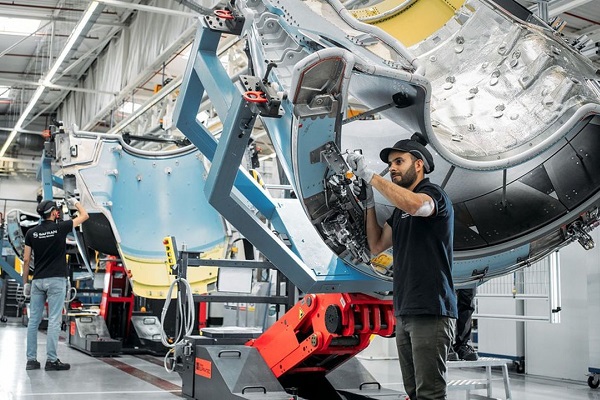
Initial foreign investments aimed at labor-intensive operations are now accompanied by engineering activities, non-destructive testing, critical supply chain operations, and maintenance. Moroccan sites deliver components with micrometric tolerances, adhering to NADCAP and EN9100 standards, which are key to accessing Boeing and Airbus supply chains.
This progress can be attributed to a triptych: macroeconomic stability, specialized industrial zones (MIDPARC, aerospace free zones), and sustained training efforts. International groups are internalizing functions in Morocco that were once reserved for Europe, indicating trust in the locally produced quality.
Employment and skills: from operator to engineer
The core challenge is no longer just quantitative but qualitative. Manufacturers are hiring profiles capable of programming 5-axis machining centers, managing metrology, or ensuring quality assurance in an aerospace environment. The Aeronautics Professions Institute (IMA) and engineering schools are adapting their curricula towards special processes, industrial data, and predictive maintenance.
To secure the scaling up, companies are co-constructing pathways: internships, micro-certifications, technician-engineer bridges. The expected outcome is evolving careers and a skills pyramid that supports productivity.
Local integration and supply chains
Competitiveness relies on local integration: surface treatments, wiring, composites, tooling. The deeper the industrial base, the less the supply chain depends on imports, reducing lead times and costs. Moroccan SMEs are progressively gaining access to suppliers' panels of major contractors, driven by traceability and OTD (On-Time Delivery) requirements.
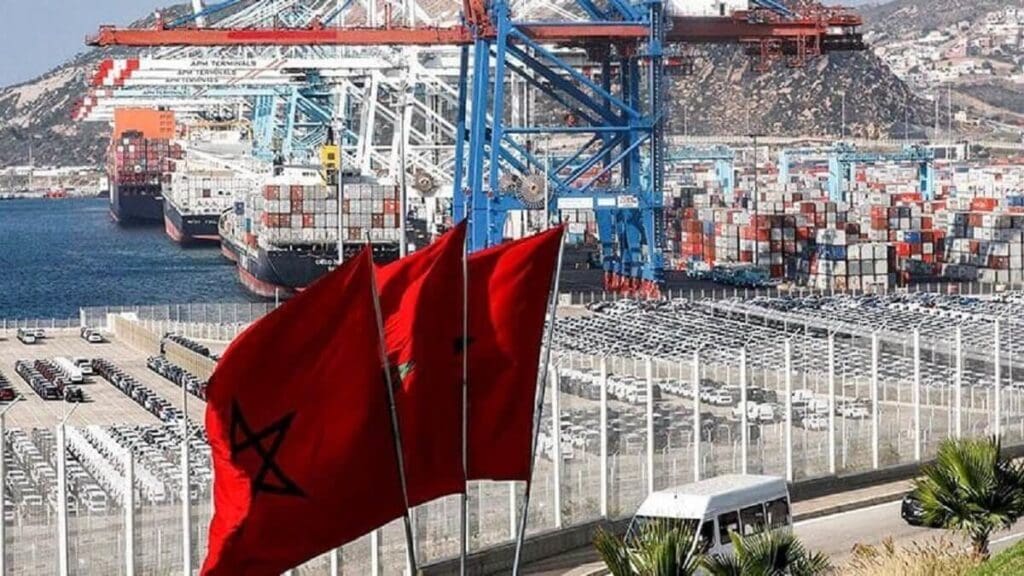
Port (Tanger Med) and airport logistics corridors support export performance. Ultimately, the ambition is to involve Moroccan actors in work packages of sub-assemblies, rather than only individual parts.
Innovations and sustainability
R&D roadmaps focus on dry machining, automation of inspections, energy optimization, and material circularity. Carbon footprint is becoming a business criterion: decarbonized energy and eco-design processes enhance the attractiveness of Moroccan sites in location decisions.
In the background, diversification into aerospace (small launchers, ground equipment) and defense opts for a common technological base: advanced materials, embedded systems, and industrial cybersecurity.
Roadmap 2030
Objective: to double export value, raise local content, secure critical skills, and strengthen the SME network. The key will be fine coordination between the government, professional federation, and investors to link growth, social quality, and innovation.
Sources
- Ministry of Industry and Commerce
- GIMAS – Grouping of Moroccan Aerospace and Space Industries
- CSR and quality reports (Safran, Spirit AeroSystems, Collins)
- MIDPARC – Aerospace ecosystem of Nouaceur
- Sector studies: World Bank, African Development Bank, Policy Center