The figure of Massinissa and the legacy of Numidia hold significant importance in the historical imagination of central Maghreb. However, the modern use of this ancient period often strays from the established data provided by historians. Understanding this era requires a clear distinction between documented facts and contemporary identity interpretations.
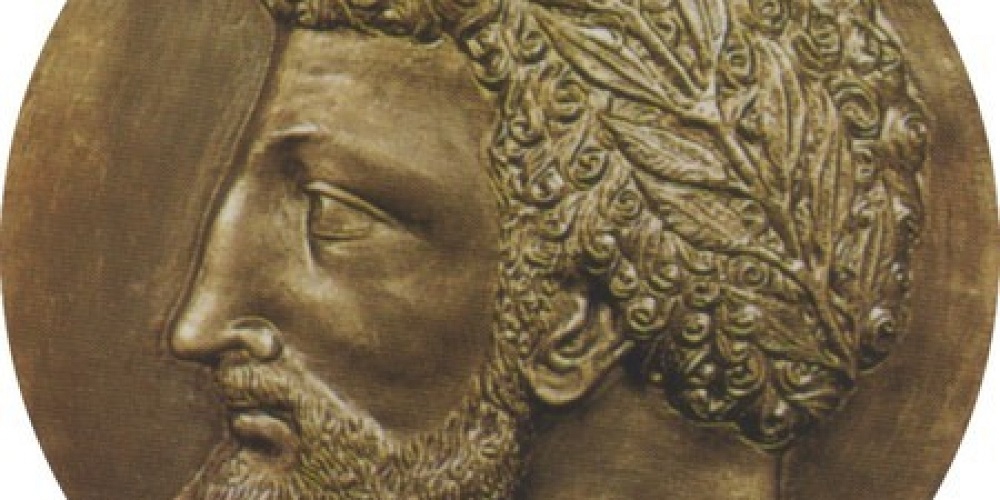
Massinissa, son of Gaia, became in the 3rd century BCE the first king to unify a large part of the Numidian tribes. His reign is set against a geopolitical backdrop dominated by the Punic Wars between Rome and Carthage. The Numidian power gradually built up through fluctuating alliances, agricultural reforms, and a more structured central authority. Massinissa remains a well-known figure of this period, particularly through Roman accounts, especially those of Sallust, which describe him as a sovereign allied with Rome against Carthage.
Regarding territorial matters, historical sources converge on one crucial point: Numidia was not a nation-state in the modern sense. It was a collection of tribal confederations, spread across present-day northeast Morocco, western Tunisia, and parts of modern Algeria. The contemporary borders, drawn in the 20th century, do not correspond to the political spaces of antiquity. Therefore, associating Numidia with a modern national territory is more a matter of memory construction than historical fact.
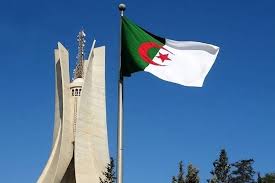
In several Maghreb countries, antiquity is sometimes mobilized within identity narratives aimed at reinforcing a sense of historical continuity. In Algeria, Massinissa is often presented as a founding figure, a symbol of pre-Islamic unity. This phenomenon is not isolated: other nations draw from their ancient past to forge a national narrative. However, academic research emphasizes the plural and fragmented nature of North African societies during this time, far from a homogeneous or exclusive identity.
Numidia itself was not a monolithic kingdom. It included zones of influence, variable alliances, and significant local autonomy. After Massinissa, internal conflicts, particularly among his heirs, fragmented power until the direct intervention of Rome, which gradually transformed these territories into imperial provinces. The political construction of Numidia did not survive in the long term and cannot be assimilated to a nation-state in the modern sense.
In current debates, invoking Massinissa or Numidia reveals a greater desire to rely on a prestigious past than a faithful reading of historical sources. Historical science reminds us that Maghreb identities have been shaped by centuries of Mediterranean exchanges, migrations, dynasties, and cultural mixing well beyond a single ancient period.
Thus, while Massinissa remains a fascinating figure in North African heritage, his legacy must be placed in a rigorous perspective: that of an era where borders were fluid, tribal affiliations dominated political structures, and modern narratives cannot be projected without nuance onto deeply different ancient realities.