
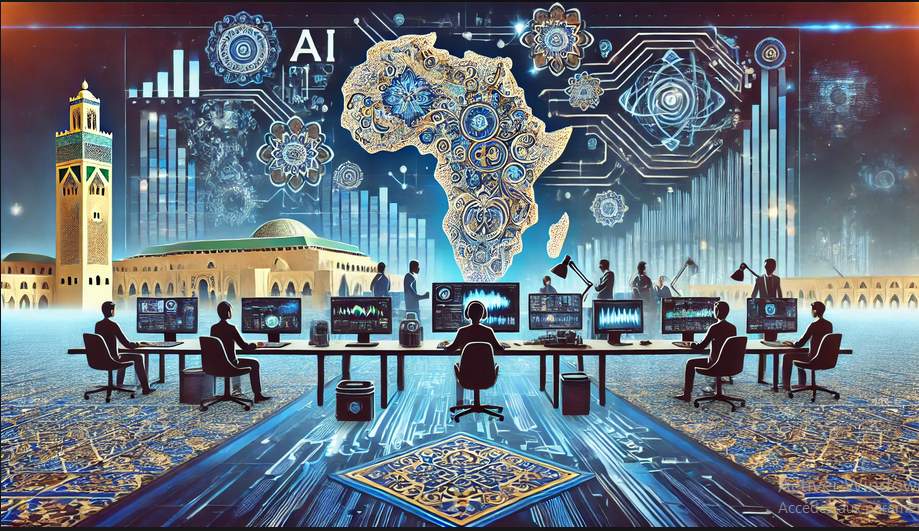
The adoption by the European Parliament of the “AI Act”, the first comprehensive law regulating artificial intelligence, marks a historic milestone in global digital regulation. This text imposes strict rules on transparency, safety, and accountability for AI systems, and is already inspiring other regions of the world, starting with Africa.
For Morocco, a regional pioneer in digitalization, this development raises fundamental questions: how can an international legal framework be adapted to a local context that is still under construction? And above all, how can technological development, digital sovereignty, and citizen protection be reconciled?
For several years, the Kingdom has been making significant investments in the digital economy: establishing AI laboratories in universities, deploying e-government projects, and developing startups specialized in data, predictive health, or smart logistics. Artificial intelligence is no longer an abstract concept but a concrete lever for modernization.
However, the lack of clear legislationraises uncertainties. Who is responsible when an algorithm discriminates? How can the confidentiality of collected data be guaranteed? And what role should ethics play in the design of AI systems?
Moroccan legal experts advocate for an approach inspired by the European model but adapted to the African reality: a flexible, gradual regulation focused on protecting human rights. Morocco could thus become a digital governance laboratory for the continent, provided it involves public institutions, businesses, and civil society.
At the continental level, the African Unionhas been working since 2022 on an “African Strategy for Artificial Intelligence” aimed at harmonizing legal frameworks and encouraging cooperation among states. However, the disparity in infrastructure, legislation, and economic priorities complicates this ambition.
The danger would be to create a technological divide between an over-regulated North and an under-protected South. If Africa does not quickly define its own digital doctrine, it risks becoming dependent on foreign giants that produce technology and hold data.
For Morocco, the challenge is clear: to embrace AI without losing control of its data and sovereign choices. The country has significant advantages—an educated youth, political stability, and a network of innovative businesses—but must accelerate the establishment of modern, balanced, and inclusive legislation.
Beyond law, it is a matter of trust: AI must be perceived not as a threat, but as a tool at the service of citizens. The success of this transition will depend on Morocco's ability to build a national ethical framework, rooted in its values while remaining open to the world.
Sources:
European Parliament (AI Act, 2025), African Union, Medias24, Jeune Afrique, Oxford Insights – Government AI Readiness Index