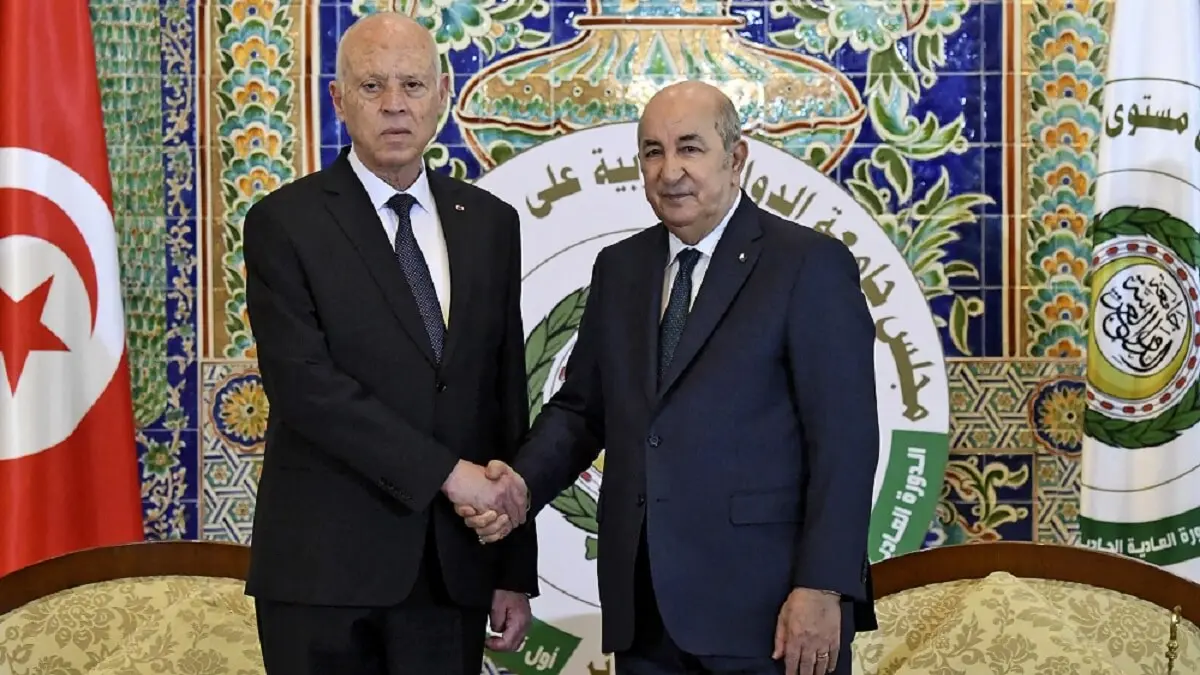
Tunisia is experiencing a political and economic phase where external support becomes a matter of sovereignty. In this climate, Algeria has emerged as the most visible ally of the Tunisian government, citing a 'brotherly' relationship and strategic proximity. However, the more intense this relationship becomes, the more some in Tunisia, including public opinion and observers, perceive a risk of dependency — potentially paving the way for interference.
One key fact fueling this debate is money. Tunisia, facing recurrent budget tensions, has officially acknowledged a $300 million loan from Algeria, presented as a crucial lifeline during a critical moment. This aid, along with other financial and political gestures, is defended by Tunis as a sovereign choice dictated by urgency. However, critics argue it establishes an asymmetric relationship where support can explicitly or implicitly become a tool of influence.
A second fact is security, which has become the core of the rapprochement. A military and security cooperation agreement signed in Algiers on October 7, 2025, has sparked reactions in Tunisia, particularly due to its perceived opacity and the sensitivity of the issue of 'sovereignty.' Media and NGOs express concern that, in an unstable regional context, intensified cooperation can be seen as protection... or as creeping guardianship, depending on the political angle taken. The Tunisian government and some supporters, on the other hand, argue that this is an updating of previous cooperation frameworks focused on combating terrorism, cross-border crime, and securing borders.
The third fact is political alignment and the battle of narratives. As Tunisia becomes more polarized, the relationship with Algeria is being instrumentalized by the opposing camps. Opposition voices accuse the government of seeking a form of regional legitimacy through its closeness to Algiers, even as internal dissent and criticisms of authoritarianism grow. Simultaneously, the Tunisian government emphasizes the theme of sovereignty and the fight against 'interference,' including in its discourse on financing, NGOs, and foreign pressures.
Finally, there is energy and interdependence, often less visible yet structuring. Tunisia partially relies on its regional energy balances, while Algeria is strengthening its role as a supplier and energy partner, which mechanically consolidates Algiers' centrality in the Tunisian equation. Once again, the perception depends on the lens: pragmatic cooperation to stabilize a neighbor, or dependency that undermines Tunisia's maneuverability.
Ultimately, the concept of 'Algerian interference' in Tunisia is less a legal proof than a political diagnosis: that of a weakened country, where the need for allies transforms into a national debate on sovereignty. Amid financial support, security coordination, and diplomatic convergences, Algeria has established itself as an indispensable partner. The remaining divisive question in Tunis is: does this partnership protect Tunisia... or does it silently reorganize its strategic choices?