
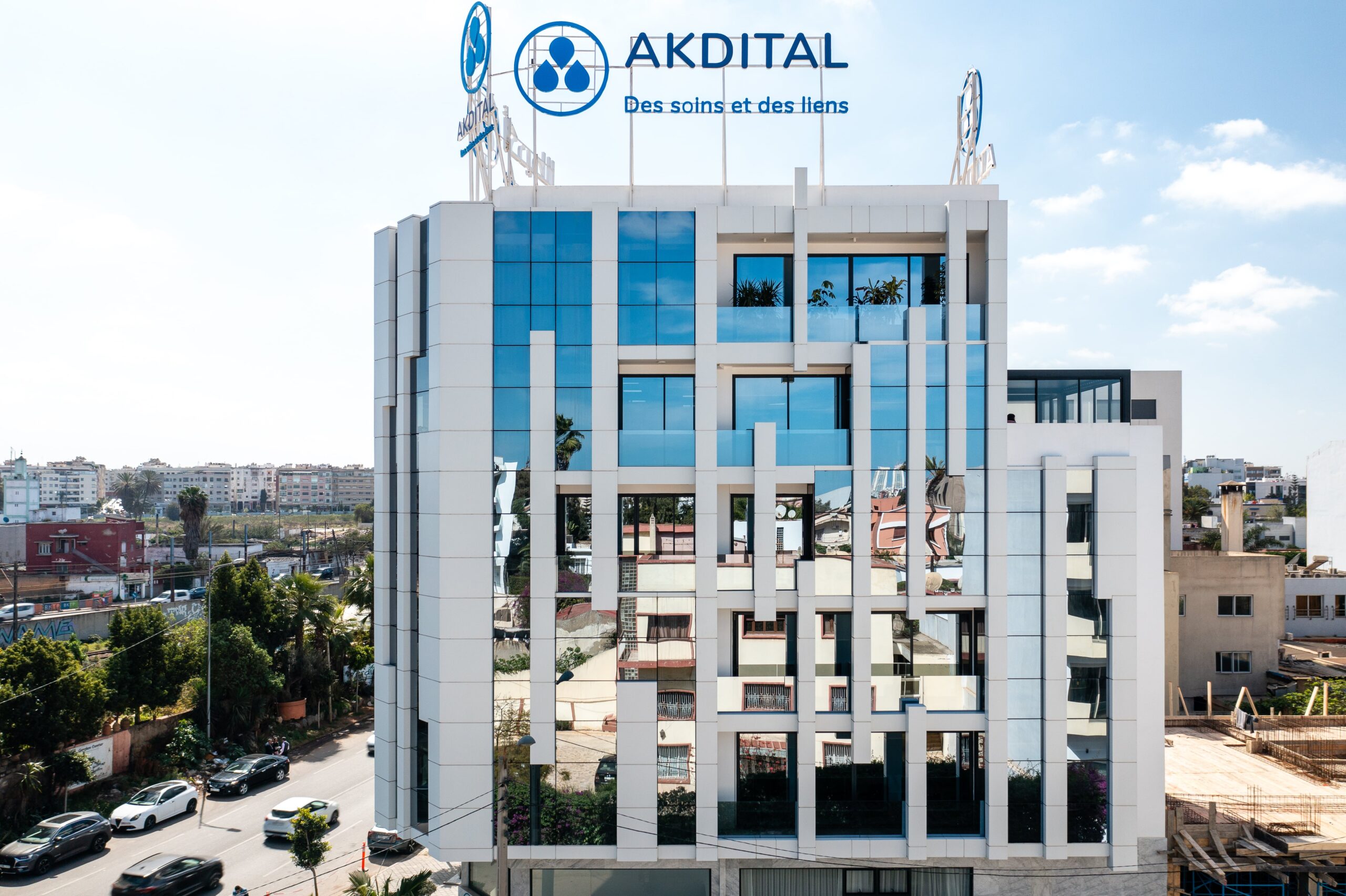
Akdital, a symbol of Morocco's new private healthcare
Founded in the early 2010s, Akdital has established itself as a key player in private healthcare in Morocco. Multidisciplinary clinics, specialized facilities, and a presence in several major cities: the group has quickly become one of the most visible faces of the 'new private healthcare offer.'
This rise occurs amid significant reforms in the healthcare system, including the expansion of medical coverage and efforts to modernize healthcare offerings through investment. For some, Akdital meets a real need for capacity and infrastructure; for others, it represents the potential pitfalls of rapid privatization.
The local center project: a warning sign
The breaking point with some members of the medical community crystallized around Akdital's proposed national network of diagnostic and local centers.
This project aimed to create a network of private facilities capable of guiding, diagnosing, and following patients, either before or alongside hospital care.
Unions and associations of independent doctors viewed it as a vertical integration attempt: capturing part of the patient flow, influencing care direction, and establishing a model where private enterprise becomes the necessary step to access certain services.
In response to the profession's mobilization, the project was ultimately withdrawn from the Competition Council. However, this episode left lingering concerns and intensified questions about the group’s long-term strategy.
The risk of medical commodification
At the heart of the criticisms lies the notion of 'commodification' of health.
Independent doctors fear a system where business logic—profitability, volume of procedures, financial objectives—ends up dictating medical decisions.
Specifically, the commonly cited risks include:
-
the temptation to increase the number of procedures and tests to profit from infrastructure;
-
the dependence of practitioners on a single employer or group;
-
the establishment of contractual models that limit therapeutic freedom;
-
the reduction of patients to 'clients' in an integrated system, from consultation to the operating room.
Even if these scenarios are not inevitable, the significant role of a private group in such a sensitive sector as health raises concerns.
Access to care: what about the most vulnerable?
Another major concern revolves around equity in access to health services.
The rise of a powerful private player can have two contradictory effects:
-
on one hand, it increases the availability of beds, technical platforms, and specialists in certain cities;
-
on the other hand, it risks concentrating offerings where they are most profitable, to the detriment of disadvantaged regions.
In a context where the expansion of medical coverage is underway, the question is straightforward:
Will the poorest Moroccans really have access to these private facilities, or will they find themselves in a two-tier system, with overburdened public facilities on one side and upscale clinics reserved for those who can pay (or those with the best insurance) on the other?
A jolt for independent doctors and clinics
The rise of Akdital impacts more than just the doctor-patient relationship. It disrupts the economic balance of the profession.
Many independent clinics, practices, and medium-sized structures fear a form of 'bulldozer effect': pressure on prices, competition for human resources, and the group’s ability to negotiate with insurers on more favorable terms than smaller structures.
Some doctors worry that, in the long term, independent liberal practice will be marginalized in favor of employment or practice under large group banners, leading to a loss of professional autonomy.
Akdital defends itself: investment, modernization, and job creation
In its defense, Akdital presents a very different narrative:
significant investments in infrastructure, creation of medical and paramedical jobs, participation in the modernization of the national technical platform, and contributing to Morocco's attractiveness in the health sector.
The group emphasizes that its projects are part of the national strategy to strengthen healthcare offerings, complementing public services rather than replacing them.
For its backers, rejecting this type of actor would mean giving up on necessary financial resources and execution capacity needed by the system.
A regulatory challenge broader than just the Akdital case
Beyond the case of a single group, this debate revolves around a fundamental question:
how to organize the coexistence of public and private health in a country undergoing health reform?
Several points frequently arise in discussions:
-
the need for strong regulation to prevent dominant positions;
-
protection of prescription freedom and medical ethics;
-
guaranteeing equitable access to care, regardless of income and region;
-
transparency in the business models of large health groups.
Akdital today symbolizes a potential shift: a health system where organized private entities play a central role, for better or worse, if regulation does not keep pace.
Conclusion: a debate that transcends a single group
The Akdital case crystallizes legitimate concerns: the influence of a private player, the risk of commodification, the future of independent doctors, and the protection of the public sector and the most vulnerable patients.
However, it also highlights the current absence of a clear and shared framework regarding the role of large health groups in Morocco's future.
The issue is therefore not merely about whether Akdital is 'dangerous' or not, but about collectively defining the boundaries, the rules of engagement, and the necessary safeguards to ensure that health remains a right, not just a market.