
A Strategic Return for the 2025 Africa Cup of Nations
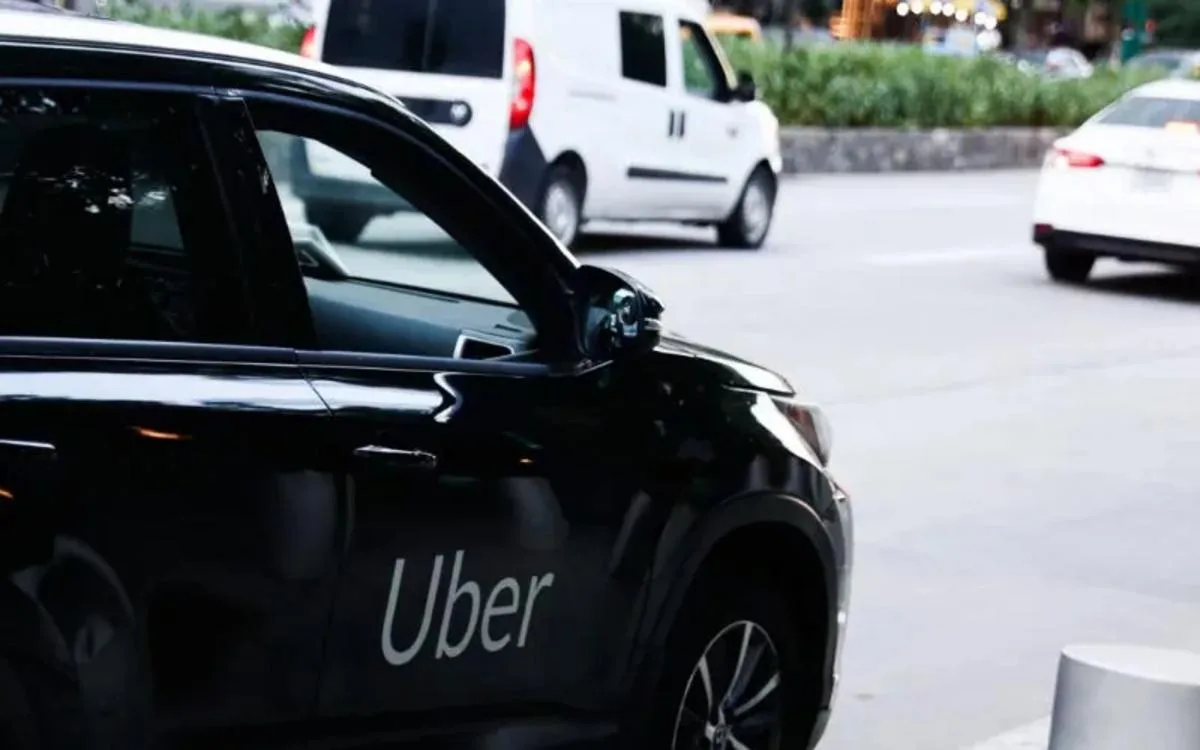
The timing is no coincidence. Uber officially restarted its services in Morocco on November 27, 2025, in Casablanca and Marrakech, less than a month before the kick-off of the 2025 Africa Cup of Nations, scheduled from December 21, 2025, to January 18, 2026. The company promises a ‘pragmatic’ offer to meet the expected surge in demand in the major cities, from tourists, supporters, and internal travel related to the event.
This return comes after a failed initial attempt between 2015 and 2018, characterized by strong resistance from taxi drivers, repeated enforcement actions, and a lack of a clear legal framework for chauffeur-driven transport. This time, Uber has seemingly learned its lesson: no private drivers, no ‘illegal VTCs’, just cars already holding official licenses for tourist transport or chauffeur-driven rental.
On paper, the company is positioning itself within the legal framework, without overtly challenging the historical monopoly of taxis on urban passenger transport. In practice, it is stepping back into a realm where the line between innovation and rule circumvention remains extremely delicate.
From Assumed Illegality to ‘Top-Down Legalization’
For several years, the Ministry of the Interior has reiterated that the use of private vehicles for paid passenger transport, without authorization, is illegal. Circulars sent to local authorities, reminders of the law, and enforcement actions have predominantly targeted VTC platforms relying on private cars without taxi licenses or transport approvals.
However, the authorities have never proposed a comprehensive reform of urban mobility. The result is a system with multiple speeds. On one side, small and large taxis, subject to strict regulations, dependent on scarce licenses and specific local taxes. On the other, a galaxy of applications – InDrive, Yango, Careem, Heetch/Toogo, and others – operating in a gray zone, with varying levels of compliance.
By returning with a model reserved for already approved fleets (tourist transport companies, chauffeur-driven car rentals, large taxis under certain conditions), Uber opts for ‘top-down legalization’. It no longer seeks to bring new informal actors into the market but aims to capture a share of the value within the existing ecosystem, where permits have already been issued.
Taxis Caught Between Anger and the Need for Modernization
For taxi drivers, Uber's return ignites a feeling of injustice. Previous mobilizations highlighted what they deemed unfair competition: on one side, taxis subjected to burdens, operational regulations, the tax on public passenger transport, and regular inspections; on the other, private cars operating through an application, without the same constraints.
Uber's new model does not fully alleviate this discomfort. Even though the application now relies on legally authorized vehicles, the perceived risk is a gradual shift in demand toward more digital, price-transparent services, often better rated by users. In other words: taxis fear remaining trapped in the ‘old world’ of mobility, while added value shifts to platforms.
Part of the profession advocates for integrating taxi services into these applications or even for taxi-specific platforms controlled by unions or cooperatives. Others categorically refuse to enter an ‘uberization’ logic, which would reduce them to mere executors of algorithms, dependent on commissions and customer ratings.
Users Seeking Reliability, Transparency, and Safety
For users, the divide is less ideological than pragmatic. Recent opinion studies show that VTC or connected taxi applications are often viewed as more reliable in terms of punctuality, more transparent about prices, and more reassuring regarding tracking. Taxis remain essential for a significant portion of the population, especially in lower-income segments and less connected areas.
Uber's return is also about meeting the very concrete expectations of urban residents: the ability to order a car at any time, limit informal price negotiations, track routes in real-time, pay by card when necessary, and have recourse in case of disputes. The battle between taxis and platforms is not merely about the ‘old world vs. new world’, but about the ability of each to meet these minimum service requirements.
The 2025 Africa Cup of Nations will serve as a real-world test. If Uber manages to provide a seamless experience for visitors and locals during this peak demand period, it will reinforce the notion that major international competitions require a level of service that is difficult to achieve without widely deployed digital tools.
A Stagnant Legal Framework, a Rapidly Changing Market
The major paradox lies here: the law has hardly changed, but the market has profoundly transformed. The regulations governing public passenger transport were designed for a world where the traditional taxi, identified by its license and station, represented the norm. Mobility platforms, on the other hand, operate on dynamics of matchmaking, dynamic pricing, and real-time geolocation.
This asymmetry creates several risks. First, the constant potential for legal insecurity for actors who deviated, even slightly, from the framework. Next, the inequality in treatment between platforms able to achieve partial compliance (via licensed fleets) and those continuing to operate with private drivers. Finally, there is a state managing on a case-by-case basis, through circulars and declarations, what is essentially a substantive reform issue.
Uber's return could accelerate the awareness of this inconsistency. As long as the law does not clearly state what is permitted, under what conditions, and with what fiscal and social responsibilities, the debate will unfold through sporadic power struggles between taxis, platforms, and local authorities.
Towards a Moroccan Compromise on Urban Mobility?
Uber's return does not mark the definitive victory of platforms nor the scheduled disappearance of taxis. It opens a new round in a confrontation that has thus far produced only a series of temporary compromises. Three pathways are emerging.
The first could involve a lockdown: tightening controls, strict limits on platforms to a few licensed fleets, and maintaining the licensing system as is. The risk would then be allowing a gray market to thrive, where applications and drivers operate semi-clandestinely, without clear contributions to fiscal or social protections.
The second pathway could be an assumed normalization: legal recognition of platforms, integration of taxis into these digital ecosystems, transparent regulation of commissions, collected data, and working conditions. This scenario requires a courageous legislative reform addressing transport, digital issues, local taxation, and labor law.
Finally, the third option might be a ‘Moroccan-style’ compromise: graduated tolerance, local adjustments, partial agreements between certain taxi unions and some platforms, without a comprehensive overhaul of the framework. This is likely the direction the market will take in the short term, in the absence of a clear political choice.
By signing its return just before the 2025 Africa Cup of Nations, Uber has forced public authorities to confront their contradictions. If Morocco wishes to present itself as a major tourist and event hub, it will eventually need to adopt a coherent vision of urban mobility that encompasses neither the ‘old-fashioned’ taxi nor wild uberization without safeguards.