The return of an ambition abandoned since Concorde
Since Concorde's cessation in 2003, supersonic flight seemed like a thing of the past: too costly, too noisy, too polluting. However, a new generation of engineers and public stakeholders is now attempting to resurrect this ambition. The X-59, developed within an experimental framework, has been designed to overcome one of the main obstacles to civil supersonic flight: the sonic boom, which prevented any use over populated areas.
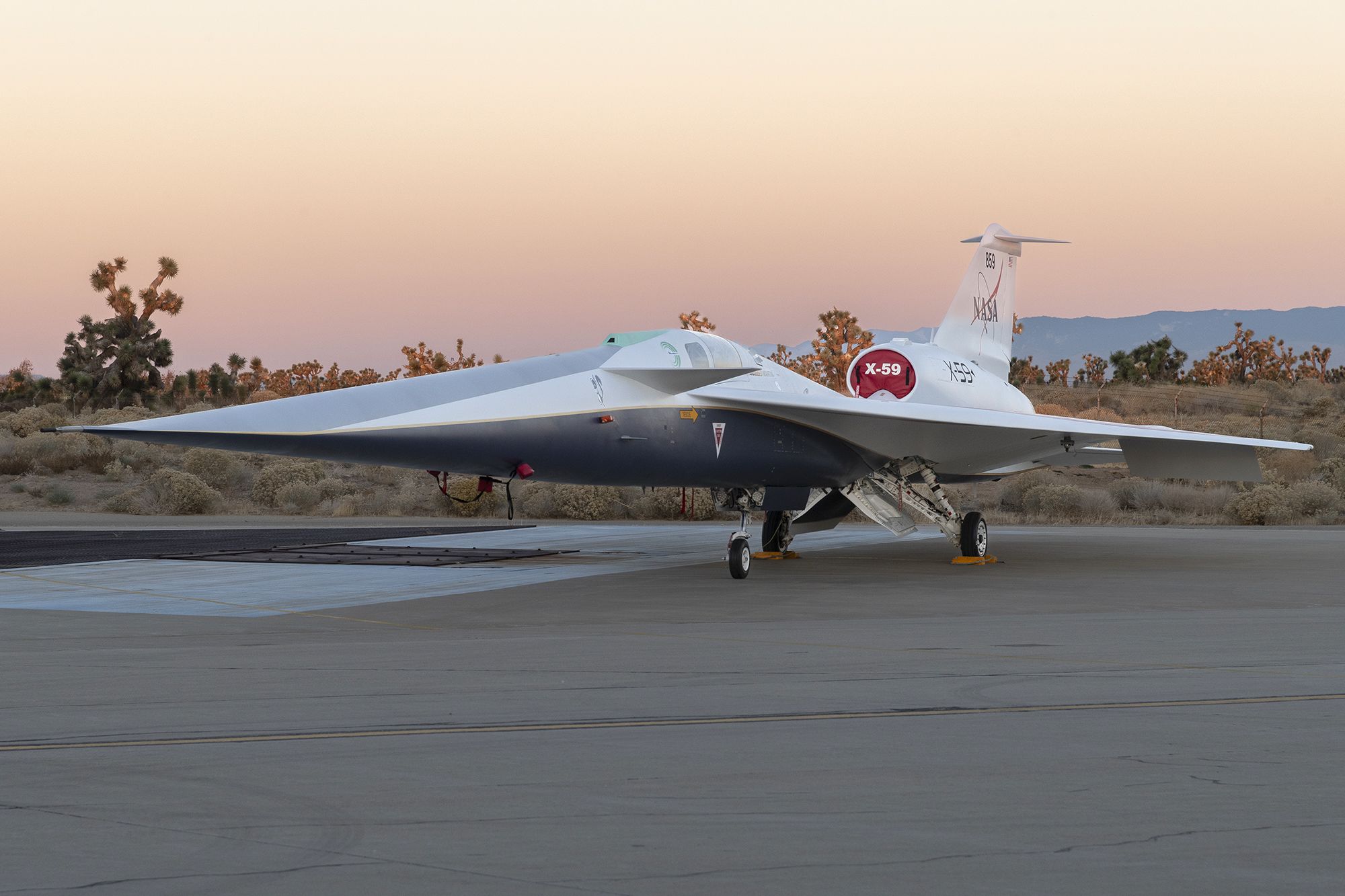
The aircraft features an elongated design, a windowless cabin, and a cockpit supported by an external vision system. This configuration aims to break the shock wave in flight and reduce the noise of the boom to the level of a door slamming. If the technology lives up to expectations, transcontinental supersonic routes could become feasible again, paving the way for a new era.
Initial flights full of promise
The first flight tests of the X-59 have generated renewed enthusiasm in the industry. The plane has demonstrated acceptable stability, a significantly reduced noise signature, and the ability to achieve aerodynamic profiles necessary for supersonic flight. While testing is still ongoing, the collected data will help determine if the concept is viable on a large scale.
Technical teams are also studying fuel consumption, thermal resistance, and structural constraints associated with speeds close to Mach 1.5. These factors will be crucial in assessing whether to consider a future commercial model based on a derivative of this demonstrator.
A major environmental challenge
The return of supersonic flight raises essential environmental questions. The energy efficiency of an aircraft flying at very high speeds remains less effective than that of a conventional airliner. The ecological cost could pose a significant barrier in an industry already pressured to reduce its emissions.
However, for supporters of the project, the X-59 could serve as a stepping stone to broader technological innovations: alternative fuels, aerodynamic optimization, lighter materials, and new propulsion methods. The challenge is not just to fly fast, but to do so cleanly and sustainably.
Implications for commercial aviation
If the X-59 confirms its performance, commercial aviation could undergo a profound transformation. Transatlantic or intercontinental trips could be significantly shortened, facilitating faster mobility for businesses, governments, and certain categories of travelers. The revival of supersonic travel could also open a premium market aimed at strategic routes.
However, the transition to a commercial supersonic aircraft is far from guaranteed. Operational costs, certification, environmental restrictions, and necessary infrastructure present considerable challenges. The success of the X-59 is just a first step towards a potential revolution in the sector.
A technological ambition for an uncertain future
The X-59 represents a pivotal moment for global aviation: an attempt to reconcile extreme speed, noise reduction, and a new environmental balance. The project could herald the revival of supersonic flight, or simply mark the last major experiment before the industry ultimately abandons this dream.
Everything will depend on the results of upcoming tests, regulatory decisions, and the willingness of manufacturers to invest in bold technology. The X-59 carries the ambition to push the limits of air transport, but also the burden of a significant legacy. The future will reveal whether supersonic flight can truly be reborn in a world that is no longer the one of Concorde.