The cradle of Moroccan pottery
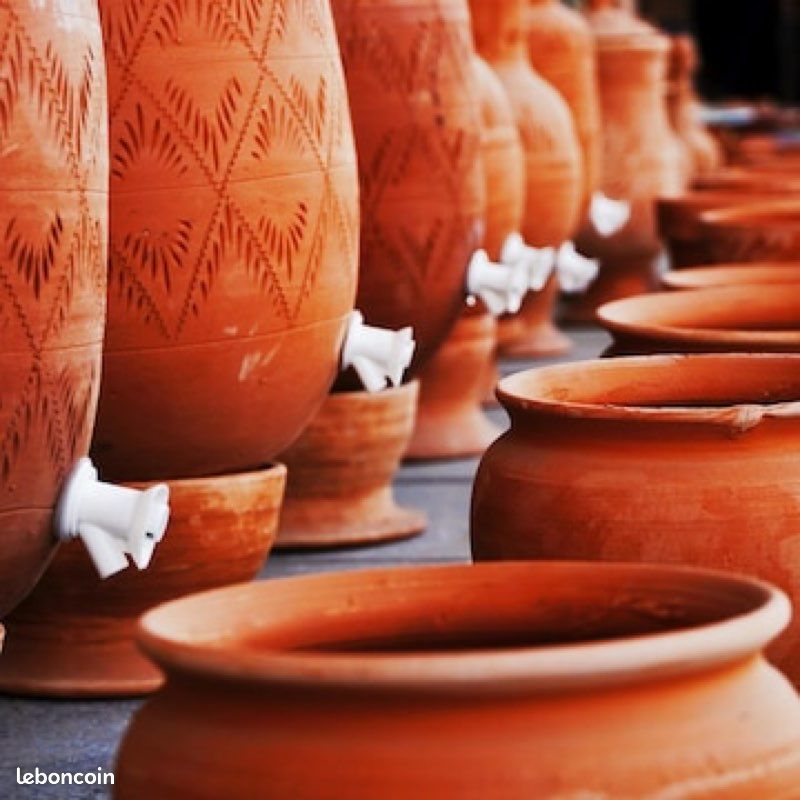
Situated between the ocean and the clay lands of Doukkala, Safi has established itself for centuries as the undisputed cradle of Moroccan pottery. Since the 16th century, the city has been mentioned by Portuguese chroniclers as a major center of potter artisans, renowned for the finesse of their works and the richness of their colors.
The red clay, extracted from the nearby hills, offers a unique raw material: malleable, dense, and a deep red after firing. It is the soul of this craft. Elders say it 'breathes' the essence of Morocco, as it encapsulates earth, fire, and human knowledge.
Gestures passed down as a sacred heritage
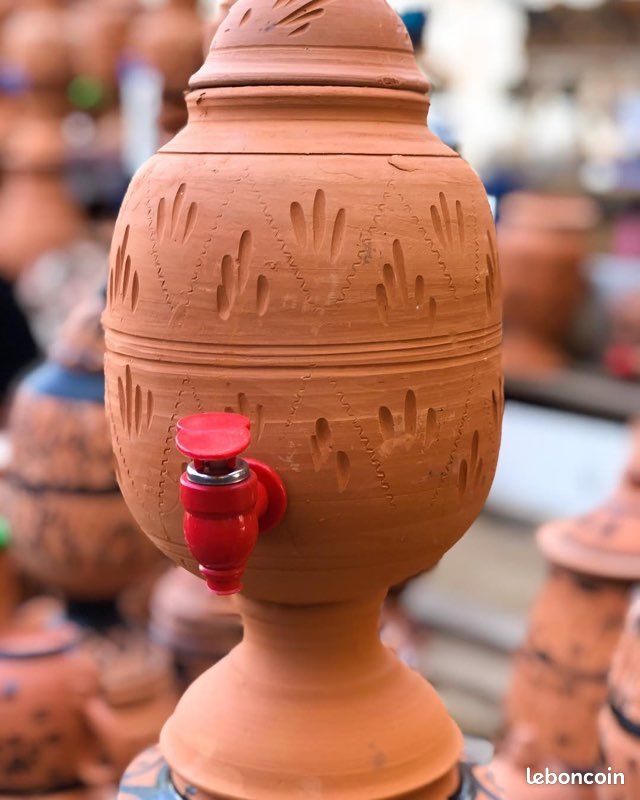
In the workshops of the medina, learning often begins in childhood. Master potters pass on the art of hand-shaping, throwing, drying, and firing to their sons, and sometimes to their daughters. No manual can replace the eye or the touch: it is the hand that guides the memory.
Sitting at his wheel, the potter makes the clay dance to the rhythm of his breath. He instinctively knows when the form is right, when the curve speaks. These gestures, repeated thousands of times, become almost a prayer. In wood-fired kilns, the fire gives the final touch, coloring the surface with glazes reflecting cobalt blue, olive green, or golden honey.
Between tradition and renewal
![Maroc] Les poteries, trésors de Safi – Way To Nowhere](https://www.waytonowhere.fr/wp-content/uploads/2017/06/WTN_art_poterie_safi-1.jpg)
In the face of globalization and industrial production, Safi craftsmanship could have faded away. However, young creators have chosen to revive this heritage by merging it with contemporary design.
In the renovated workshops of the potters' quarter, new collections are emerging: minimalist lamps, glazed tableware, ecological decorative objects... Artists reinterpret traditional Moroccan patterns to attract a younger clientele, while maintaining the authenticity that embodies Safi's spirit.
Some cooperatives, led by women, have also stepped into this renewal. They bring a touch of finesse, modernity, and innovation to a profession long dominated by men, proving that Moroccan craftsmanship can adapt without losing its identity.
Safi, a capital of earth and fire
Today, Safi is to pottery what Fès is to leather or Essaouira is to wood. Its workshops, often perched on the heights of Ksar El Bahr, attract visitors from around the world. The alleys resonate with the sounds of wheels and the crackling of kilns.
Every piece sold in markets or exported abroad tells a fragment of this story: that of a city that has turned its earth into a treasure, a profession into a passion, and a craftsmanship into a national pride.
Conclusion: the poetry of material

In a world dominated by speed and plastic, the potters of Safi remind us that beauty is created in slowness, simplicity, and the hands of man. The humble and alive red clay teaches us that every creation is a dialogue between the earth and the heart of the one who shapes it.