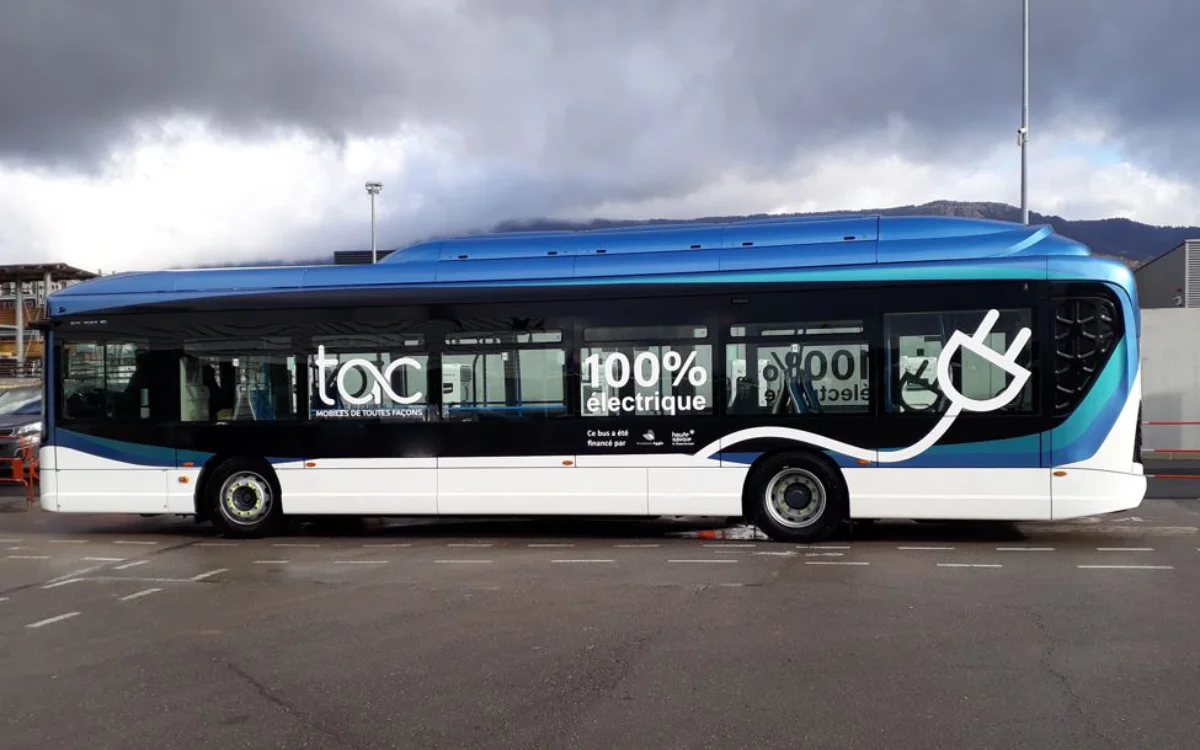
The government council in Rabat has validated a project considered one of the most ambitious ever undertaken in the field of clean mobility in Morocco. The route connecting Salé, Rabat, and Témara will now be served by a new line of fully electric buses. This initiative aligns with the national vision 'Sustainable Transport 2030', which aims to reduce energy dependence, improve air quality, and accelerate the transition towards eco-friendly infrastructure. The official validation of the project gives it a strategic dimension, particularly for a region that ranks among the most densely populated in the country in terms of daily traffic.
Authorities have announced the acquisition and operation of a fleet of thirty electric buses. These vehicles, designed to service an intercity corridor, have a high range suitable for the traffic needs between Salé, Rabat, and Témara. The three cities form the administrative and economic heart of the Rabat-Salé-Kénitra region, where nearly three million trips are recorded daily according to local data. The arrival of an electric fleet will help alleviate congestion on key routes, especially Avenue Hassan II, Avenue Mohammed VI, and the Hassan II Bridge, which are often saturated during peak hours.
The deployment of these buses goes beyond merely purchasing vehicles. The project also includes the creation of depots designed to house and recharge the entire fleet. Authorities have indicated that these depots will be equipped with photovoltaic facilities intended to supply part of the energy needed for daily operations. This choice marks a significant shift from traditional infrastructures, as it combines two priority axes of the energy transition: electric mobility and solar energy production. The depots will be located in strategic areas to reduce vehicle downtime and optimize charging cycles.
The city of Rabat has already begun its transformation towards more sustainable mobility in recent years. The introduction of electric buses complements the Salé-Rabat tram network, launched in 2011, which now transports over 220,000 people daily. The tram has played a crucial role in reducing car traffic between the two banks of the Bouregreg, but demographic growth and urban expansion have made it necessary to implement a complementary, more flexible system covering a larger area. Electric buses, being more maneuverable and less costly to deploy than an extension of the tram, precisely meet this need.
The Salé-Rabat-Témara corridor is considered one of the most important mobility routes in the country. Salé, a rapidly growing city, sends tens of thousands of workers to Rabat each morning. The capital houses most of the government agencies, ministries, and institutional headquarters. Témara, for its part, is increasingly attracting households drawn by the growing urbanization of the southern coastline. The electric line project is thus designed to facilitate exchanges between these three hubs while reducing reliance on private vehicles, which contribute significantly to congestion.
According to initial estimates from the municipalities, the introduction of thirty electric buses could lead to a significant annual reduction in CO₂ emissions, aligning with Morocco's climate commitments. The vehicles will also have a direct impact on noise pollution, as their operation is much quieter than that of traditional diesel buses. Municipal officials contend that this project represents a first step towards a broader network of electrification for bus lines in the urban area.
The line's commissioning is expected after the completion of construction work and technical testing. Authorities indicate that the first deliveries of the buses could occur in the coming months, followed by a gradual ramp-up. The construction of solar depots is a crucial element of the timeline, as it determines the fleet's actual capacity to operate without relying solely on the traditional electrical grid.
By approving this project, the government reaffirms its commitment to making Rabat a national model of sustainable mobility. The capital, already involved in urban revitalization programs and improvements to public infrastructure, takes another step towards a complete modernization of its transport network. This initiative also strengthens Morocco's position in the MENA region as a pioneering country in energy transition, a sector in which it is developing numerous innovative projects, from solar energy to electric mobility.