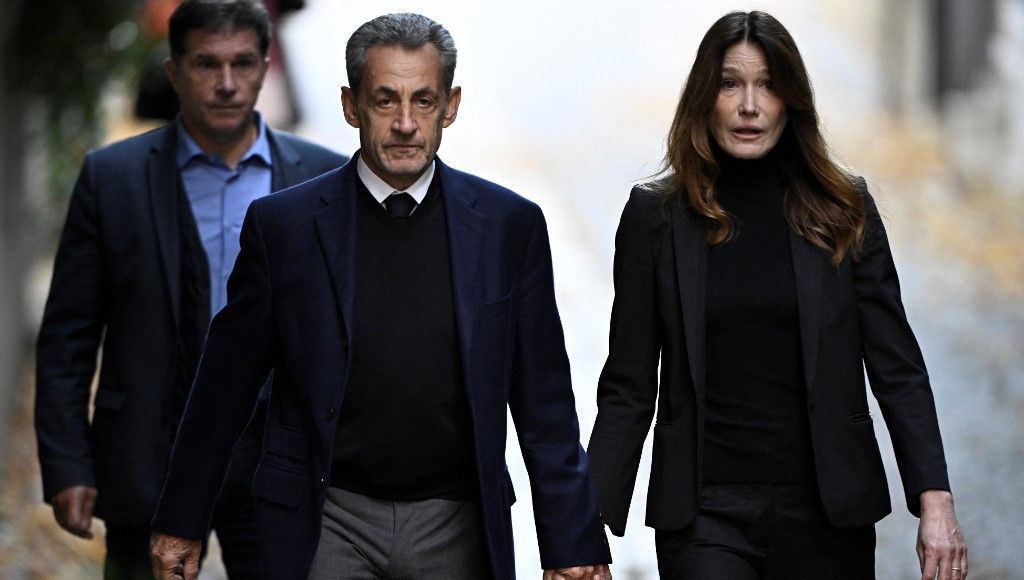
The image has circled the globe: Nicolas Sarkozy, President of the French Republic from 2007 to 2012, walking through the gates of La Santé prison in Paris. Sentenced to five years in prison, of which three are firm, for "criminal conspiracy" in the Libyan funding case of his 2007 campaign, the former head of state began serving his sentence on Tuesday, October 21, 2025.
A sprawling affair
The so-called "Sarkozy-Kadhafi" affair dates back more than fifteen years. Investigating judges suspect the former president of having benefited from concealed funds from the regime of Muammar Gaddafi to finance his victorious presidential campaign.
Multiple intermediaries and former ministers have also been implicated. After a decade of investigations, the French justice system has ruled: Nicolas Sarkozy was found guilty of criminal conspiracy, an offense involving active participation in an organized system of illegal financing.
An unprecedented conviction
This is the first time, under the Fifth Republic, that a former French president has been incarcerated.
The court's decision mandates immediate execution of the sentence, despite the appeal filed by the defense. The former head of state has been sent to La Santé detention center, where he benefits from a detention regime suited to public figures, with individual space and enhanced security measures.
Mixed political reactions
The reactions within the French political class have been strong.
Supporters of Nicolas Sarkozy condemn it as "judicial harassment," while others applaud it as "a significant moment for democracy" and a reinforcement of the principle of equality before the law.
The French government, for its part, has refrained from commenting, preferring to emphasize the independence of the judiciary.
A shockwave beyond borders
This incarceration has triggered a shockwave far beyond France. Several European media view it as a symbol of a democracy that spares no one, while others see a deep rift between justice and public opinion.
For many observers, this affair is likely to have lasting repercussions on the image of French institutions and reopen the debate on the moralization of political life.
What will happen legally?
Nicolas Sarkozy's lawyers have already announced plans to appeal to the Court of Cassation. If the decision is upheld, the former president could serve his entire sentence or receive an alternative arrangement under electronic monitoring.