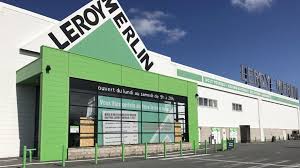
An unexpected controversy shakes Leroy Merlin.
For several hours now, the DIY brand has found itself at the center of a political buzz on X, following a post highlighting an intervention by the collective Sleeping Giants France. They claim to have reported to the group the presence of Leroy Merlin ads onFrontières, a site labeled as 'far-right' by critics. The brand reportedly then requested the removal of these ads.
An advertising withdrawal... turned political affair.
In practice, such requests are common: large brands regularly seek to avoid being displayed on platforms deemed sensitive, controversial, or toxic. This is known asbrand safety, a standard practice in managing automated campaigns via Google Ads.
However, on X, the information was immediately weaponized: several political and activist accounts have accused Leroy Merlin of 'caving to the far-left,' even claiming it is 'aligning with LFI.' Others talk about an attempt at 'censorship of a patriotic site' or call for a boycott. All interpretations that are far removed from the technical reality: the brand is simply adjusting its advertising display, as most major advertisers do.
Sleeping Giants, the unwitting trigger of the buzz.
The collective Sleeping Giants, which aims to encourage brands to pull their ads from sites it deems extremist, plays a central role in this case. Very active on social media, it regularly conducts such campaigns. The fact that Leroy Merlin adjusted its display after their notification was enough to trigger a wave of political reactions.
A polarized climate where everything becomes a matter of conflict.
This situation illustrates the current shift in public debate: a neutral business decision, made in the normal course of managing programmatic ads, transforms into a national controversy as soon as it involves politically marked sites or collectives.
This type of incident also reveals the growing influence of social media in company image management. Leroy Merlin has, so far, issued no official response—an often effective strategy to allow a controversy, confined to activist circles, to fade away.
No major crisis, but unwanted visibility.
At this stage, the controversy is not covered by mainstream media and remains limited to X. However, if prominent political figures take up the issue, it could gain momentum.
For Leroy Merlin, this episode serves as a reminder that, in an ultra-polarized climate, the management of automated advertising can quickly be interpreted—or distorted—on the political field.