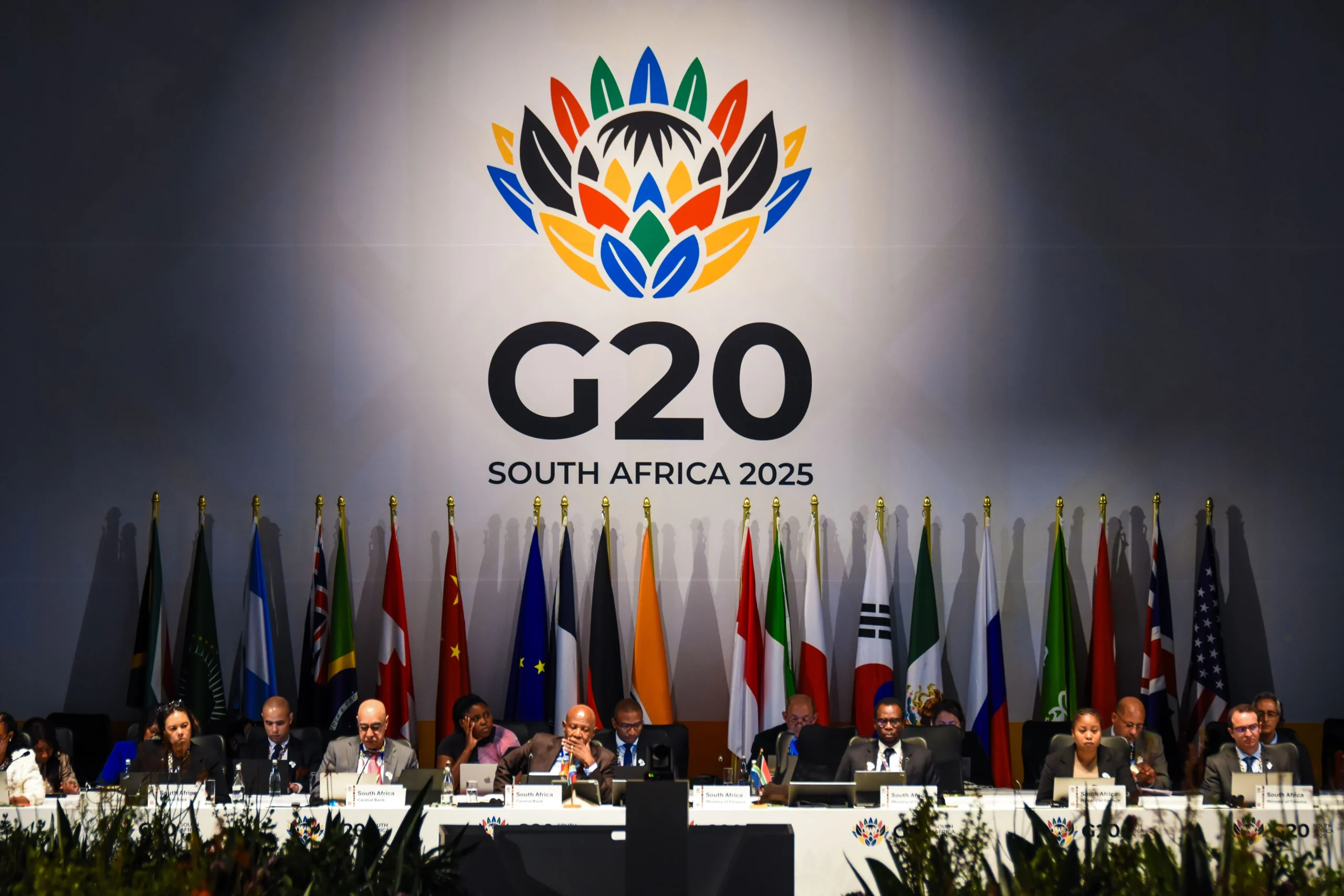
A historic moment for the continent.
The 2025 G20, held in Johannesburg, marks a significant milestone: never before has a summit of this magnitude taken place on African soil.
This decision symbolizes the continent's rising influence in global economic and geopolitical balances, as well as the recognition of its needs and potential.
Africa at the center of global discussions.
The summit is centered around several priorities proposed by South Africa and supported by the African Union:
-
reforms of international financial institutions,
-
access to financing for development,
-
energy transition and energy security,
-
combatting the effects of climate change,
-
African industrialization,
-
food security.
These themes reflect the continent's urgent needs in the face of current global challenges.
Towards a reform of the international financial system.
One of the key issues of the 2025 G20 concerns the transformation of financing mechanisms.
Africa is calling for:
-
debt restructuring,
-
better access to low-interest loans,
-
increased participation in the decisions of the IMF and World Bank.
The summit could pave the way for a rebalancing between emerging countries and advanced economies.
Energy transition: a strategic challenge.
Energy issues hold a crucial place on the agenda.
While the continent possesses vast solar, mineral, and gas resources, it still lacks the infrastructure to fully harness them.
The G20 offers an opportunity to strengthen:
-
partnerships for renewable energy,
-
green hydrogen production,
-
the valuation of critical resources (cobalt, lithium),
-
reducing dependence on fossil fuels.
Morocco, Egypt, Kenya, and Namibia are particularly highlighted as future energy hubs.
Industrialization: Africa seeks its turning point.
Several African countries push for the summit to initiate a new dynamic of industrialization, particularly through:
-
technology transfer,
-
diversification of local production,
-
the creation of regional value chains.
The goal is to move away from a model primarily based on raw material exports.
A more visible Africa on the international stage.
The African Union, which became a permanent member of the G20 in 2023, now plays a strategic role.
In Johannesburg, Africa is no longer just a guest: it actively participates in decisions.
This paves the way for more inclusive global governance.
Persisting international tensions.
This G20 takes place in a context marked by:
-
ongoing trade tensions,
-
energy rivalries,
-
regional conflicts,
-
the effects of climate change.
The summit must navigate these fractures while seeking common ground globally.
Conclusion.
The G20 Johannesburg 2025 marks a historic turning point.
For the first time, Africa hosts the world's major powers on its soil and places its priorities at the center of discussions.
This summit could redefine international balances and usher in a new era for a continent that is now claiming its place in global governance.