The Paradox of Agricultural Support
Morocco has embarked on a massive agricultural support policy for two decades.The Green Morocco Plan, followed by the Generation Green strategy, has mobilized significant funds to modernize farms, develop irrigation, and enhance food security. At the same time, subsidies for inputs—seeds, fertilizers, equipment, animal feed—aim to maintain production and consumer price stability.
However, the Moroccan agricultural value chain is fragmented. Between the farmer, the collector, the processor, the distributor, and the retailer, margins accumulate. The consumer often pays for a final product that is disconnected from the actual production cost. In some cases, the aid initially designed to reduce prices only supports the strongest links in the system.
When Public Aid Doesn't Always Benefit the Producer
Take the case of milk. Cooperatives and industries benefit from subsidies on collection and refrigeration, but small farmers face extremely low purchase prices, sometimes barely above production costs. The difference recurs downstream, at the processing and distribution stages. The same logic applies to the tomato and poultry sectors: subsidies on inputs or energy benefit larger operators more than family farms.
The issue isn't so much the existence of aid as its orientation. In a market where processing and logistics are concentrated in a few hands, the value created by subsidized production shifts towards urban centers and large groups.
From Field to Store: The Long Road of Price
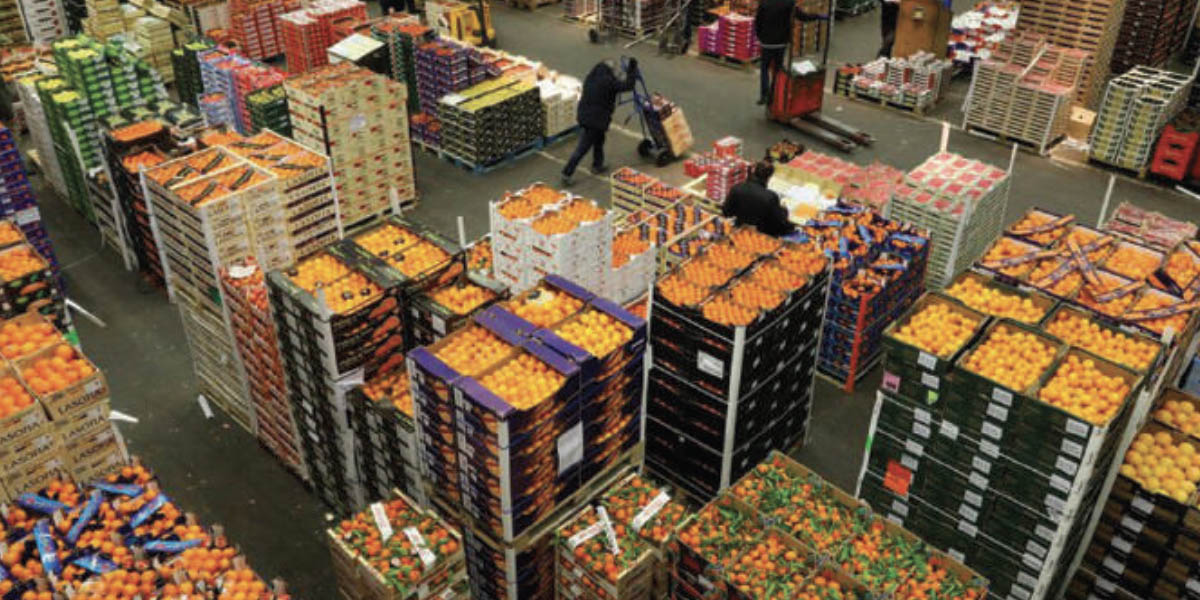
Every dirham spent on the farm can multiply four to five times before reaching the consumer. Transport, storage, packaging, taxes, commissions, and wholesale margins stack up. In some channels, particularly for fresh products, as much as 60% of the final price corresponds to post-harvest costs.
The lack of transparent oversight of these margins prevents any real control. The Ministry of Agriculture publishes reports on production but not on the distribution of income by link. As for purchasing centers and distribution chains, they negotiate directly with industries, leaving small producers without leverage.
Subsidies and Competition: A Precarious Balance
The Moroccan subsidy system is based on constant tension. On one side, the state wants to preserve purchasing power and support production. On the other, it must avoid creating distortions that favor the most powerful. Subsidized flour, sugar, and certain oils illustrate this dilemma: aids guarantee price stability, but they also sustain rents.
The gradual withdrawal of direct subsidies on fuels and certain inputs has not been accompanied by a clear mechanism to redirect aid towards producers. The result: modernization primarily benefits integrated farms and large estates capable of investing, while small farms remain vulnerable.
A Sector Under Pressure
The liberalization of agricultural trade, particularly under agreements with the European Union and Arab countries, has accelerated Morocco's specialization in certain export crops. This has favored the profitability of some sectors but intensified regional inequalities. Irrigated areas in Souss and Loukkos capture the majority of investments and aid, while mountainous and semi-arid regions remain dependent on emergency aid and occasional programs.
Successive climate crises, rising water costs, and energy inflation have exposed the fragility of the model. Many producers are now turning to shorter circuits or artisanal processing, trying to reclaim a share of the value that escaped them.
Towards a Revamp of Value Chains
The government promises a revision of the subsidy system through the National Agricultural Registry and the digital traceability of aid. The goal would be to ensure that every public dirham truly reaches the producers. But for the reform to have a lasting impact, it must be accompanied by a complete overhaul of the agri-food chain: transparency of margins, regulation of distribution, and incentives for local processing.
Morocco lacks neither skills nor ambitions in the agricultural sector. What it now needs is real equity between land and market. As long as producers do not capture a fair share of the value they create, food sovereignty will remain a theoretical objective.
Sources
-
Ministry of Agriculture — 2024 Reports on Subsidies and Generation Green Strategy.
-
Court of Auditors — Analysis of Agricultural Aid and Market Distortions (2023).
-
HCP — Studies on the Distribution of Added Value in Agri-Food Sectors.
-
OCP Policy Center — Note on the Competitiveness of the Moroccan Agro-Industrial Sector (2024).
-
FAO and World Bank — Evaluation of Public Support to Moroccan Agriculture.
-
Articles from Médias24, L’Économiste, Le Desk, and Challenge.ma on agricultural subsidies and food distribution.