
Where Architecture Becomes Imagination
Moroccan architecture and heritage have long fascinated me through their diversity, intricate details, and rich visual language. From the courtyards and riads of Marrakech to the architectural character of Tangier and the distinctive details found across Morocco’s different regions, I find an endless source of inspiration in the relationship between architecture, culture, history, and visual expression.
What draws me to these spaces is not only their physical form, but the details that carry stories: the geometry of arches, the rhythm of ornament, the texture of walls, the colours of doors, the relationship between light and shadow, and the way architecture interacts with plants, water, and everyday life.
As a journalist and visual artist, I approach places through both observation and imagination. My artistic practice moves across surreal, conceptual, abstract, and documentary photography. These different approaches allow me to explore architecture not simply as something to reproduce, but as a visual language that can be reinterpreted, transformed, and experienced in new ways.
This collection of ten artworks is a conceptual and artistic exploration inspired by Moroccan architecture and heritage. Rather than documenting specific buildings or presenting literal representations of particular locations, the works reinterpret architectural elements, cultural references, colours, forms, and atmospheres through my own visual language.
Some compositions remain connected to recognisable architectural forms, while others move toward surrealism, abstraction, and imagined spaces. Together, they exist somewhere between architectural memory and artistic invention.
For me, art is not only about reproducing what we see. It is also about exploring what a place might become through imagination—how an arch can become an emotion, a doorway can become an idea, a courtyard can become a memory, and colour can become a story.
Geometry as a Visual Language
One of the aspects I find most fascinating in Moroccan architecture is the way geometry becomes more than structure or decoration. It becomes rhythm, balance, repetition, and a visual language in its own right.
The intricate patterns of zellige, the relationships between geometric forms, and the precision of traditional decorative craftsmanship demonstrate how individual elements can come together to create complex and harmonious compositions. Their beauty lies not only in colour, but in the relationships between shapes, patterns, and spaces.
This resonates deeply with my own artistic practice. I am often drawn to the relationship between repetition and variation, symmetry and disruption, structure and freedom. In my work, architectural details may be exaggerated, simplified, rearranged, or transformed. A pattern can become the central subject of an image; an arch can frame another space; or a familiar architectural element can be placed within an unexpected visual context.
I see geometry as a form of visual poetry—capable of creating order while still leaving room for mystery and interpretation.
The Door: A Threshold Between Worlds
Doors have always held a particular fascination for me. They are architectural elements, but they are also symbols of transition. They separate spaces while inviting us to imagine what lies beyond them.
The monumental doors, historic gates, and carefully designed entrances found throughout Moroccan architectural heritage possess a remarkable visual presence. Their proportions, surfaces, ornamentation, and surrounding architectural details can transform an entrance into something almost ceremonial.
In my interpretation, the door becomes more than an entrance. It becomes a psychological threshold.
A monumental doorway surrounded by colour and intricate details may suggest history, mystery, belonging, departure, or discovery. The viewer stands before an opening, but the destination remains unknown. This ambiguity is intentional. I want architecture to raise questions rather than provide answers.
In some of my artworks, I place a human figure before a monumental architectural entrance. The contrast between the scale of the person and the architecture creates a quiet tension. The individual appears small, yet their presence gives the structure meaning. Without the human figure, the doorway might remain a beautiful architectural form; with it, the scene becomes a story about encounter, curiosity, and the relationship between people and the spaces inherited from the past.
The Riad: Architecture Turned Inward
The traditional Moroccan riad offers another architectural idea that deeply interests me: the inward-facing space.
Organised around an interior courtyard, the riad creates a world within a world. Its exterior may appear restrained, while its interior reveals gardens, fountains, ornamented surfaces, tiles, and spaces that bring light, water, and nature into the heart of the home.
This inward orientation carries a poetic quality that inspires my visual compositions.
I am drawn to spaces that guide the eye through layers: one arch opening into another, a staircase leading toward an unseen corner, water reflecting a wall, or plants softening the geometry of a courtyard. These spaces create depth that is not only physical, but emotional.
In my artworks, courtyards sometimes become dreamlike environments. Architectural elements remain recognisable, but their colours, proportions, and relationships may change. I may introduce stronger contrasts, extend a perspective, or allow an unexpected element to enter the scene.
The result is not an attempt to reconstruct a particular riad, but to explore the feeling its architecture can create: intimacy within grandeur, quietness within complexity, and nature within a human-designed space.
Colour as Memory
Colour is one of the most important ways I translate architecture into emotion.
Moroccan architecture offers an extraordinary visual palette: ochre and earthy tones, terracotta reds, greens, blues, white surfaces, and the luminous colours found in decorative details and tiles. Yet my interest is not limited to these colours themselves, but to what happens when they enter unexpected relationships.
A red facade may become an expression of intensity; a golden doorway may suggest warmth or mystery. Pink walls can soften monumental architecture, while green may introduce a feeling of life and renewal. Purple, blue, and other contrasts can move an architectural composition toward a more dreamlike space.
In some of my artworks, colour deliberately moves beyond architectural realism. This is where my artistic freedom begins. I do not always want colour to describe a building accurately; sometimes I want it to describe the feeling of standing before it.
Architecture becomes a vessel for emotion. Colour is no longer simply a surface, but an atmosphere, a memory, and a narrative.
The Living Presence Within Architecture
Architecture is often presented as something that exists independently of life. Yet buildings are shaped by the people, animals, movement, and everyday encounters that inhabit them.
I enjoy introducing small, unexpected presences into monumental spaces. A cat crossing a courtyard, resting beside a doorway, or appearing within an architectural composition can change the emotional character of the entire image.
These details give architecture a human scale and intimacy. They interrupt the grandeur of a structure or the symmetry of a carefully arranged scene, reminding us that heritage is not something we simply observe from a distance; it is something we inhabit, move through, and experience.
The animal is not merely decorative. It introduces spontaneity into an ordered environment and creates a dialogue between the carefully designed world of architecture and the unpredictable world of life.
I find this contrast particularly meaningful: the permanence of walls versus the movement of living beings, the precision of geometry versus the freedom of nature.
Between Cultural Heritage and Artistic Invention
Moroccan architecture carries a rich history of cultural exchange. Its visual traditions have evolved through regional cultures, craftsmanship, and different historical influences, including Amazigh and Andalusian traditions.
These influences appear in architectural forms, materials, decorative practices, and spatial arrangements. They are not a single style or fixed visual formula, but a diverse heritage shaped across different regions and generations.
For me, engaging with this heritage does not mean reproducing its forms exactly. It means approaching it with curiosity and respect, recognising the cultural history carried by its elements while allowing them to inspire new artistic possibilities.
My artworks exist between reference and reinterpretation. An arch may evoke traditional architectural vocabulary without belonging to a specific monument. A courtyard may draw upon the atmosphere of a Moroccan riad while becoming an imagined composition. Decorative elements may be inspired by Moroccan craftsmanship and then evolve into a visual language of their own.
This distinction is important to me. I want viewers to recognise cultural echoes within the work while understanding that the images are artistic interpretations rather than documentary representations of particular sites.
Ten Images, Ten Encounters
Each artwork offers a different encounter with Moroccan architectural language.
Some explore monumental entrances and the relationship between human scale and architectural grandeur. Others focus on courtyards, passages, staircases, water, plants, and decorative surfaces. Some are driven by strong colour contrasts, while others allow geometry and light to take centre stage.
Together, the works form a visual journey rather than a catalogue of buildings.
I do not expect every viewer to read these images in the same way. A doorway may suggest passage to one person and isolation to another. A courtyard may evoke peace, childhood, memory, or a place the viewer has never visited. Ornament may be experienced as cultural reference, abstraction, or simply visual rhythm.
This openness is part of the work. Art does not need to explain every detail to create meaning.
A Personal Dialogue with Morocco
What interests me most about this project is the possibility of approaching Morocco not simply as a subject, but as a dialogue.
A dialogue between architecture and imagination, heritage and contemporary artistic expression, the permanence of materials and the movement of memory, and what can be seen and what can be felt.
As a journalist, I am drawn to understanding the stories behind places—their histories, cultural meanings, and the people who shape them. As a visual artist, I am drawn to transforming these encounters into something that may not have existed before: a new composition, an unexpected colour relationship, or an imagined architectural space.
These two perspectives meet within this collection.
The artworks do not attempt to define Moroccan architecture or represent its entire cultural heritage. They offer a personal interpretation—a visual conversation with its forms, colours, patterns, and atmospheres.
Perhaps this is what art can offer heritage: not simply another way of looking at the past, but a way of allowing it to continue moving, changing, and inspiring the present.
Personal Reflections
Geometry as a Visual Language
“I am fascinated by how architectural forms can remain recognisable while changing their meaning. A familiar shape can become something entirely different when its scale, colour, or context changes. This is one of the spaces where I feel art begins to move beyond representation.”
The Door: A Threshold Between Worlds
“I often think of doors as more than physical openings. They represent possibilities, unknown worlds, and moments of transition. I am interested in the feeling of standing before something whose meaning has not yet been revealed.”
The Riad: Architecture Turned Inward
“I am drawn to the idea of architecture creating an intimate world. A courtyard can feel like a space protected from the outside, where light, water, plants, and geometry exist in their own rhythm. I wanted to translate this feeling into images rather than reproduce a specific place.”
Colour as Memory
“I often allow colour to lead the image rather than follow reality. Sometimes the colour I imagine for a space is more important than the colour that space might have in the physical world. It allows me to create a different emotional relationship with architecture.”
The Living Presence Within Architecture
“Sometimes a very small presence can change an entire image. I like introducing an unexpected element into an architectural scene because it creates a moment of life within something monumental, and makes the space feel less distant.”
Between Cultural Heritage and Artistic Invention
“I see heritage not as something frozen in the past, but as a living source of inspiration. Its forms, patterns, and ideas can continue to evolve through different artistic languages and personal interpretations.”
Ten Images, Ten Encounters — Artwork Captions
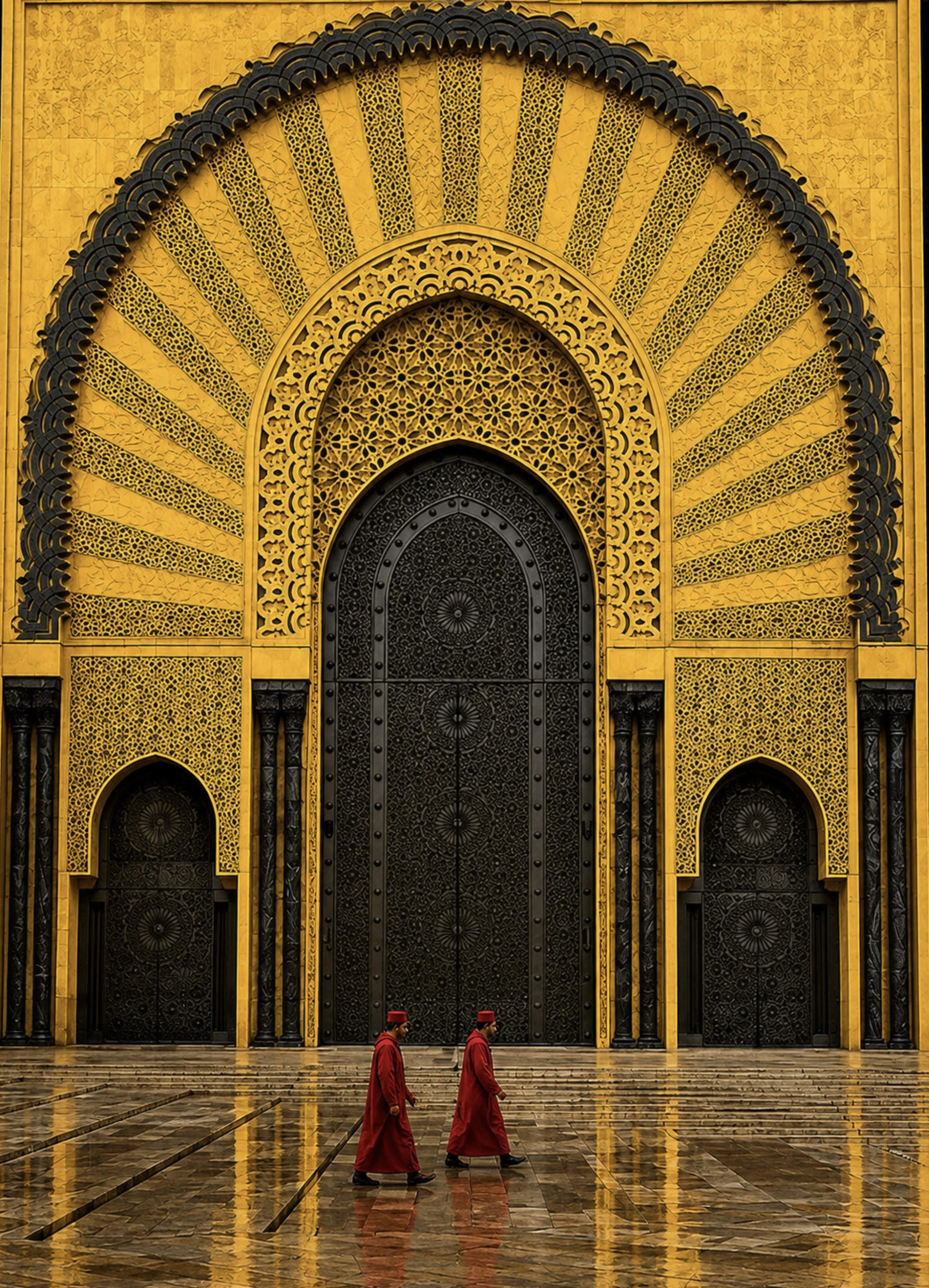
Artwork 1 — Ornament and Human Scale

I was drawn to the relationship between intricate ornament and human presence. The architectural details create a sense of grandeur, while the figure introduces intimacy. I wanted the composition to hold both scale and emotion, allowing the viewer to feel the space rather than simply observe it.
Artwork 2 — A Passage of Quiet Life
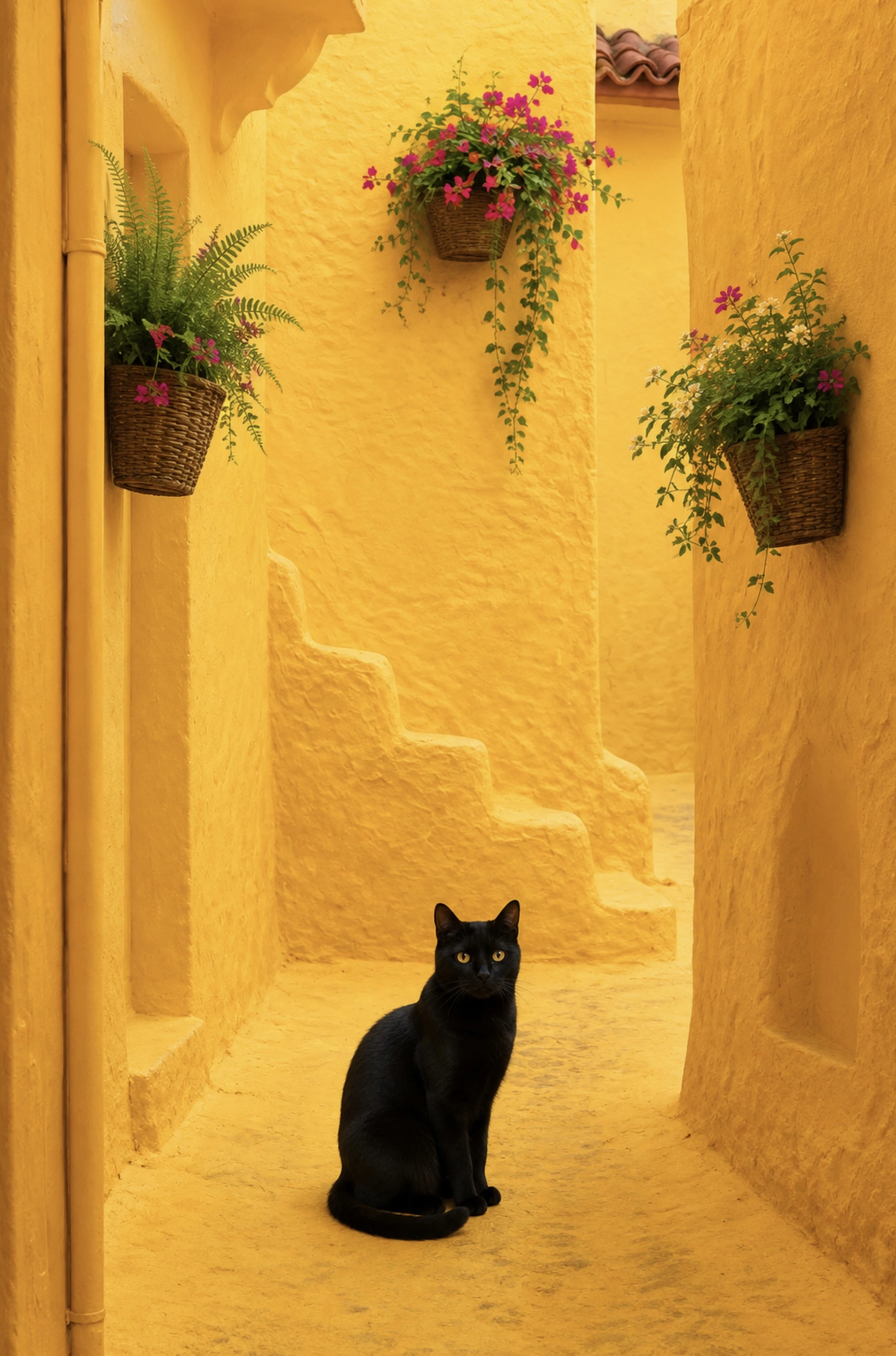
The narrow passage, warm earthy walls, plants, and the presence of a cat create a scene that feels inhabited. I wanted to move away from architecture as a monument and toward architecture as everyday life—a place where beauty exists quietly, without needing to announce itself.
Artwork 3 — The Door as a Composition
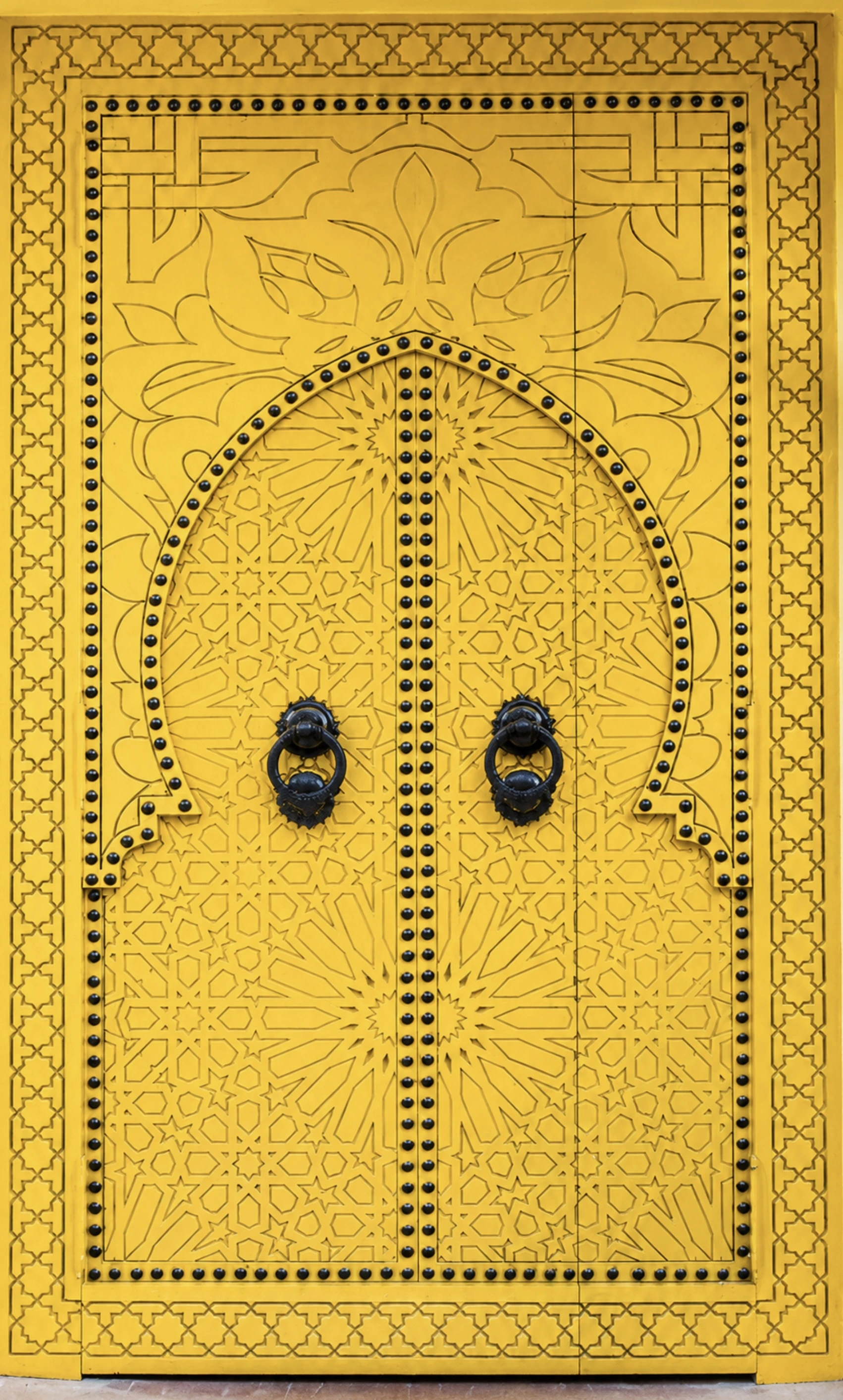
The doorway becomes the centre of the image, not simply as an architectural element but as a meeting point of geometry and colour. I was interested in how decorative details could frame a simple opening and transform it into something almost symbolic.
Artwork 4 — Colour Beyond Reality
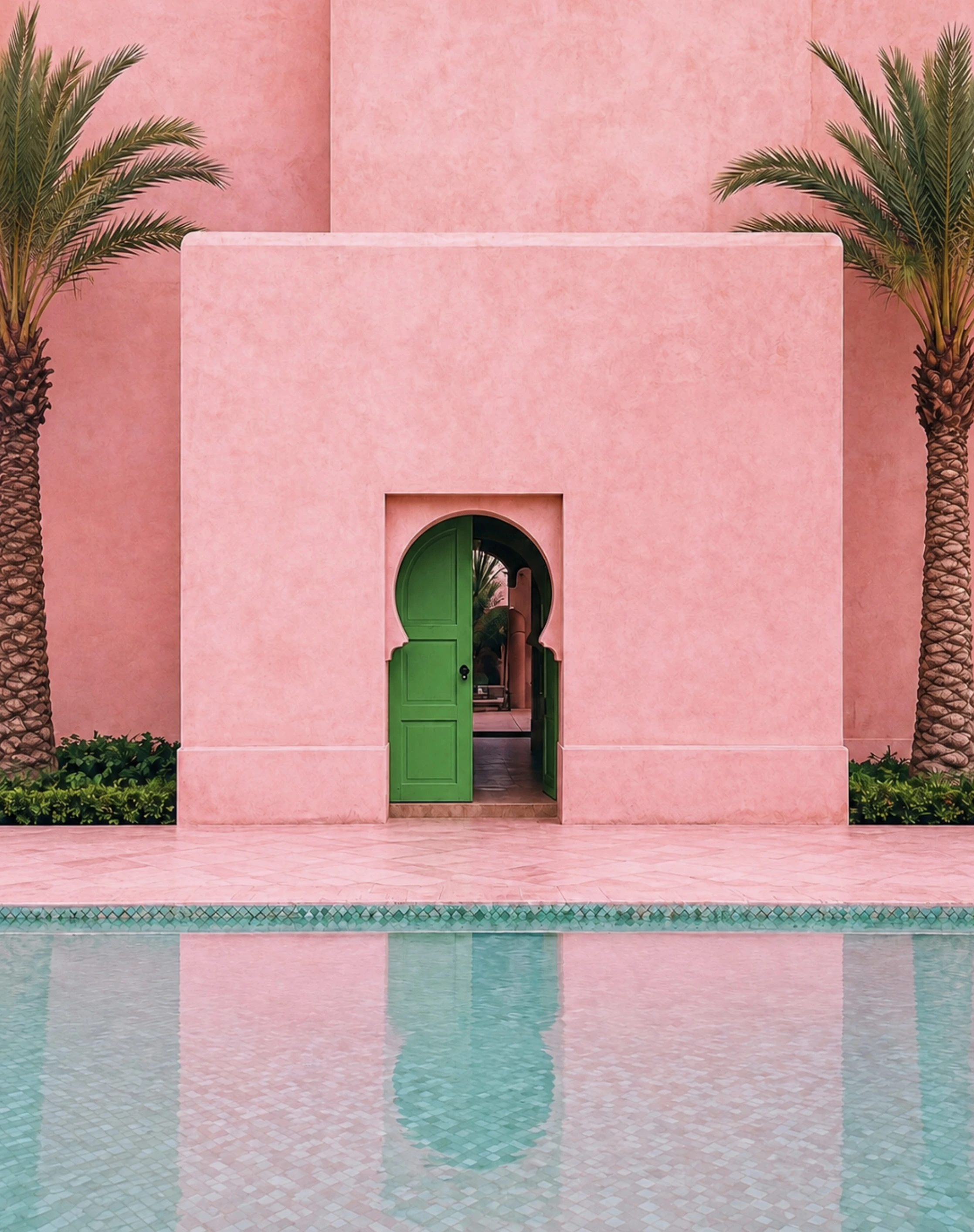
In this composition, colour becomes an independent element. The contrast between pink surfaces and a green doorway creates a playful yet balanced visual tension. I wanted to allow architecture to move beyond familiar colours and enter a more imaginative space.
Artwork 5 — The Architecture of Perspective
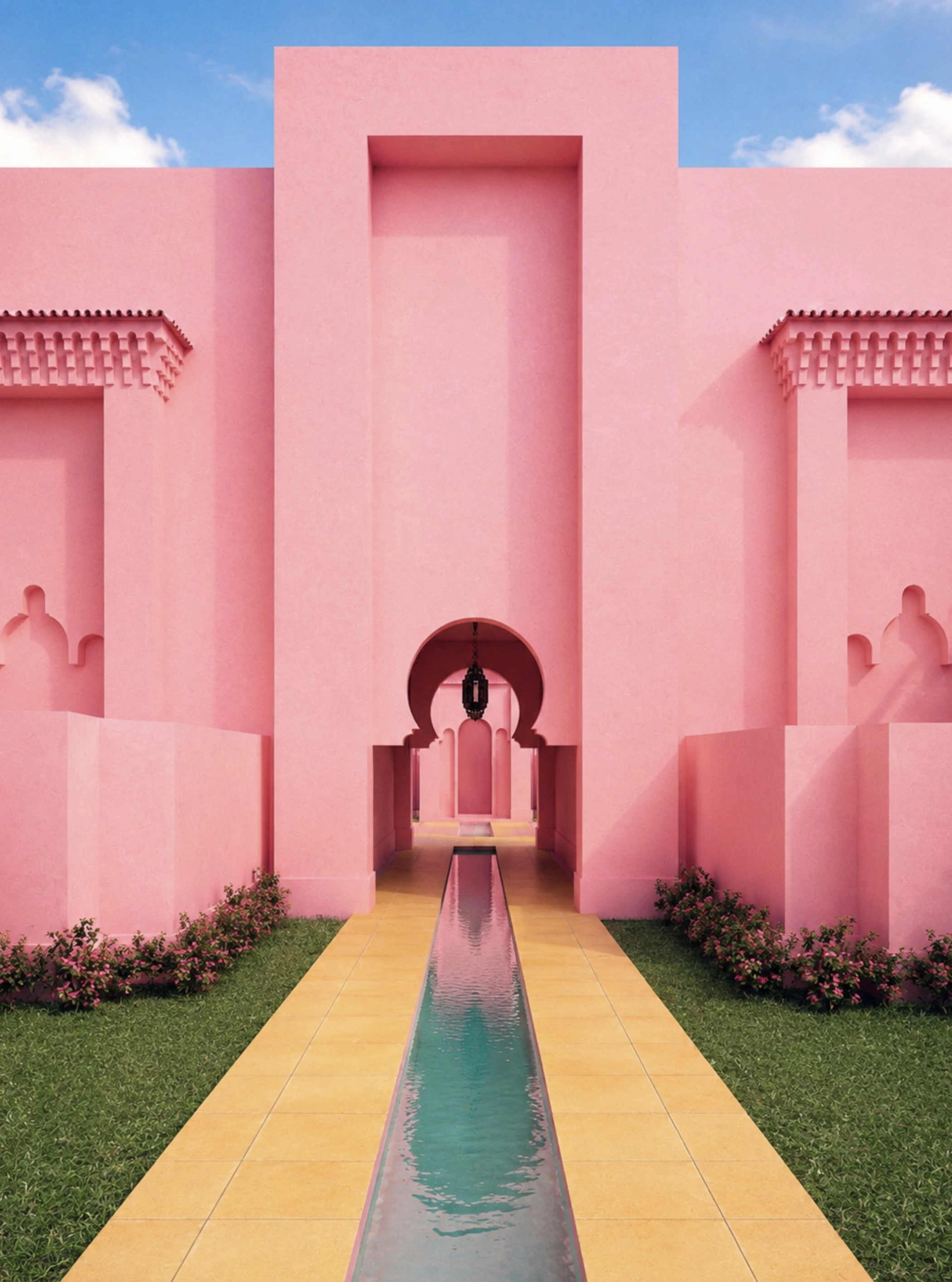
Passages, water, and repeating architectural lines draw the eye toward the distance. I was interested in how perspective can create a sense of movement while the surrounding architecture remains still. The composition becomes a journey through space.
Artwork 6 — Layers of Heritage
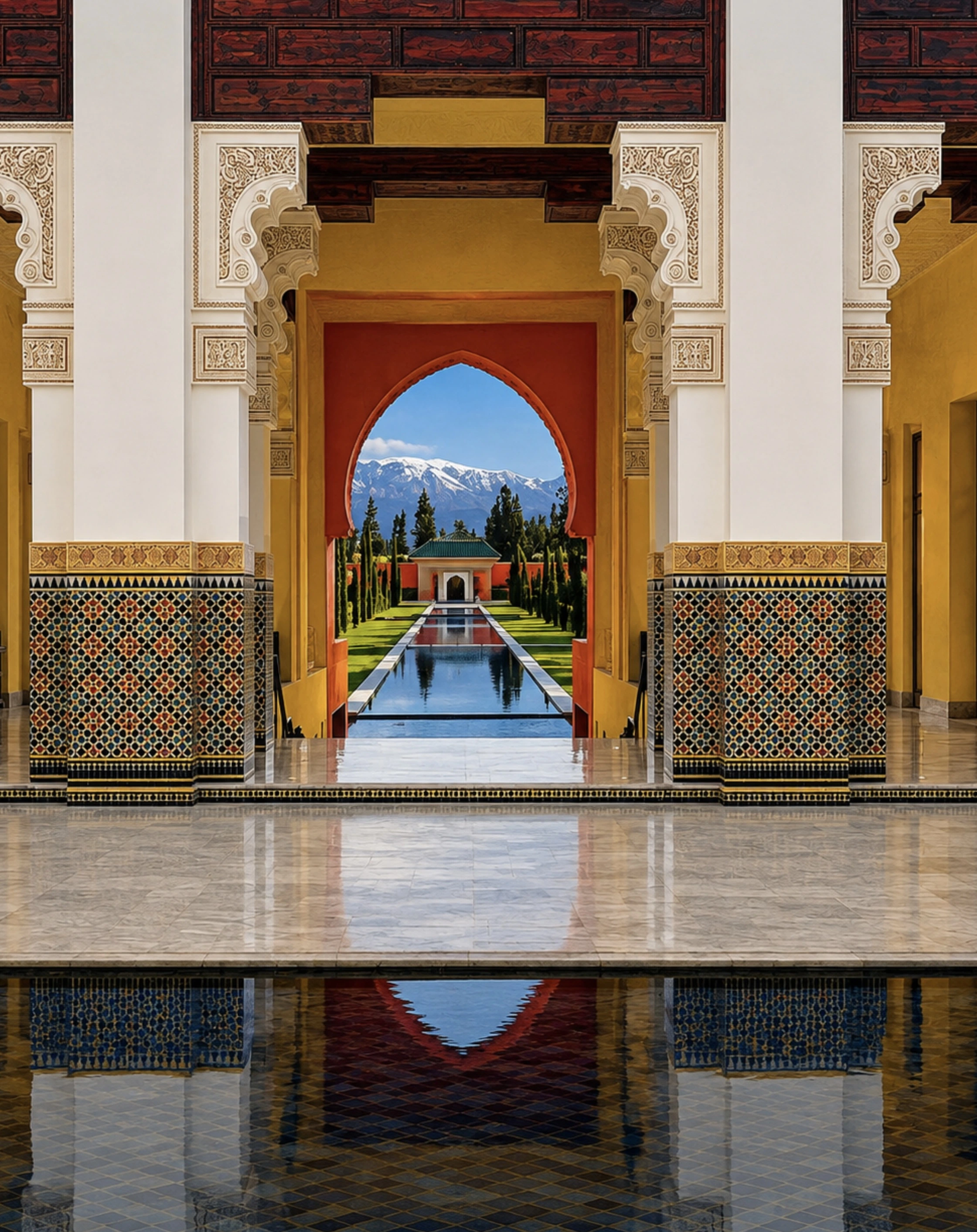
The layered arches, decorative surfaces, water, and distant landscape create a sense of architectural memory. I wanted different visual elements to coexist without competing, much like the layers of cultural influence that shape architectural traditions over time.
Artwork 7 — A Courtyard in Motion
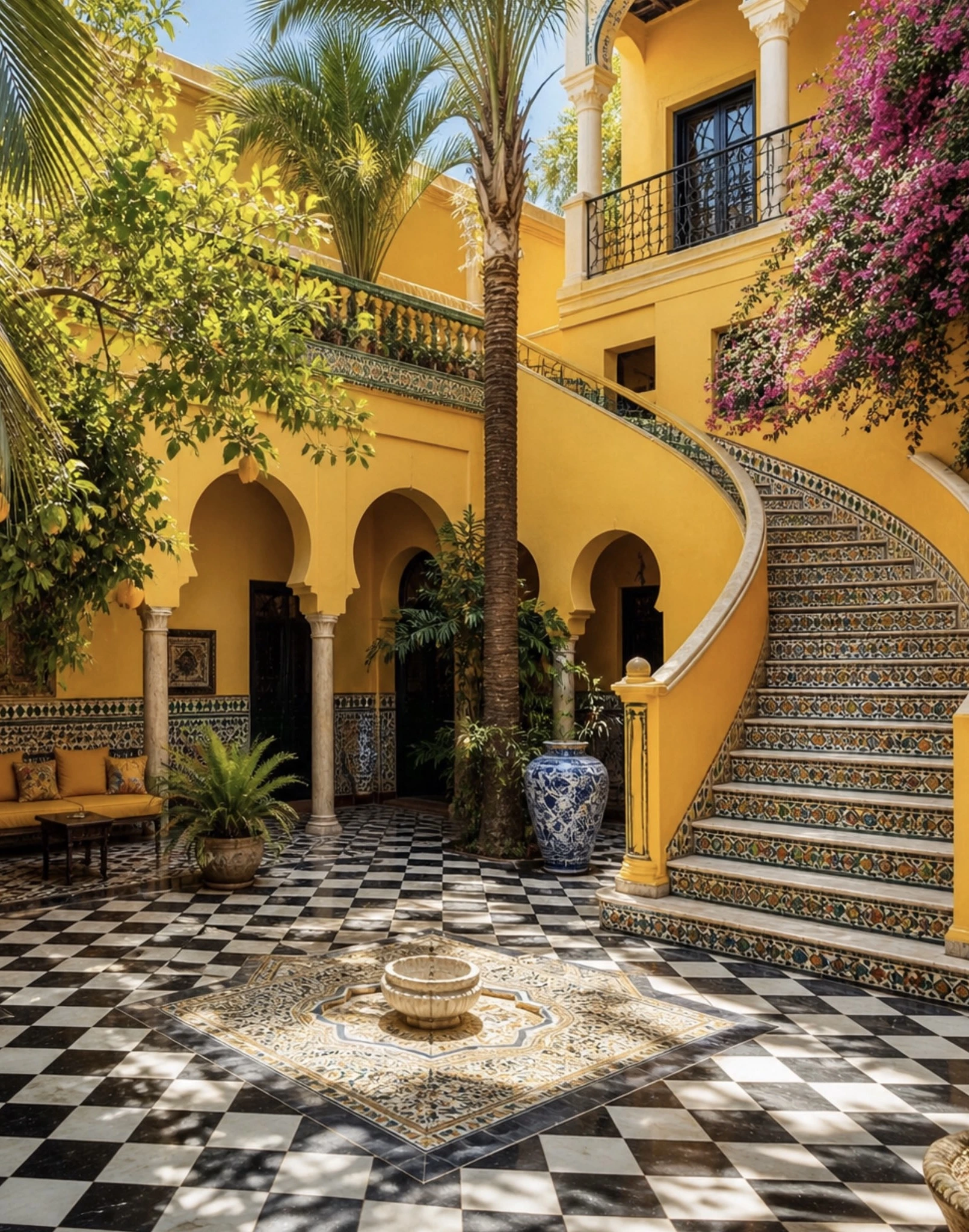
Stairs, plants, decorative surfaces, and light create an environment where architecture and nature meet. I wanted the courtyard to feel less static and more alive—a space that changes through light, movement, and the presence of life.
Artwork 8 — The Quiet Geometry of an Arch

This work focuses on the arch as a sculptural form. By simplifying the surrounding elements and emphasising colour and shape, I wanted to reveal the quiet beauty of architectural geometry and allow structure itself to approach abstraction.
Artwork 9 — A Doorway and a Visitor
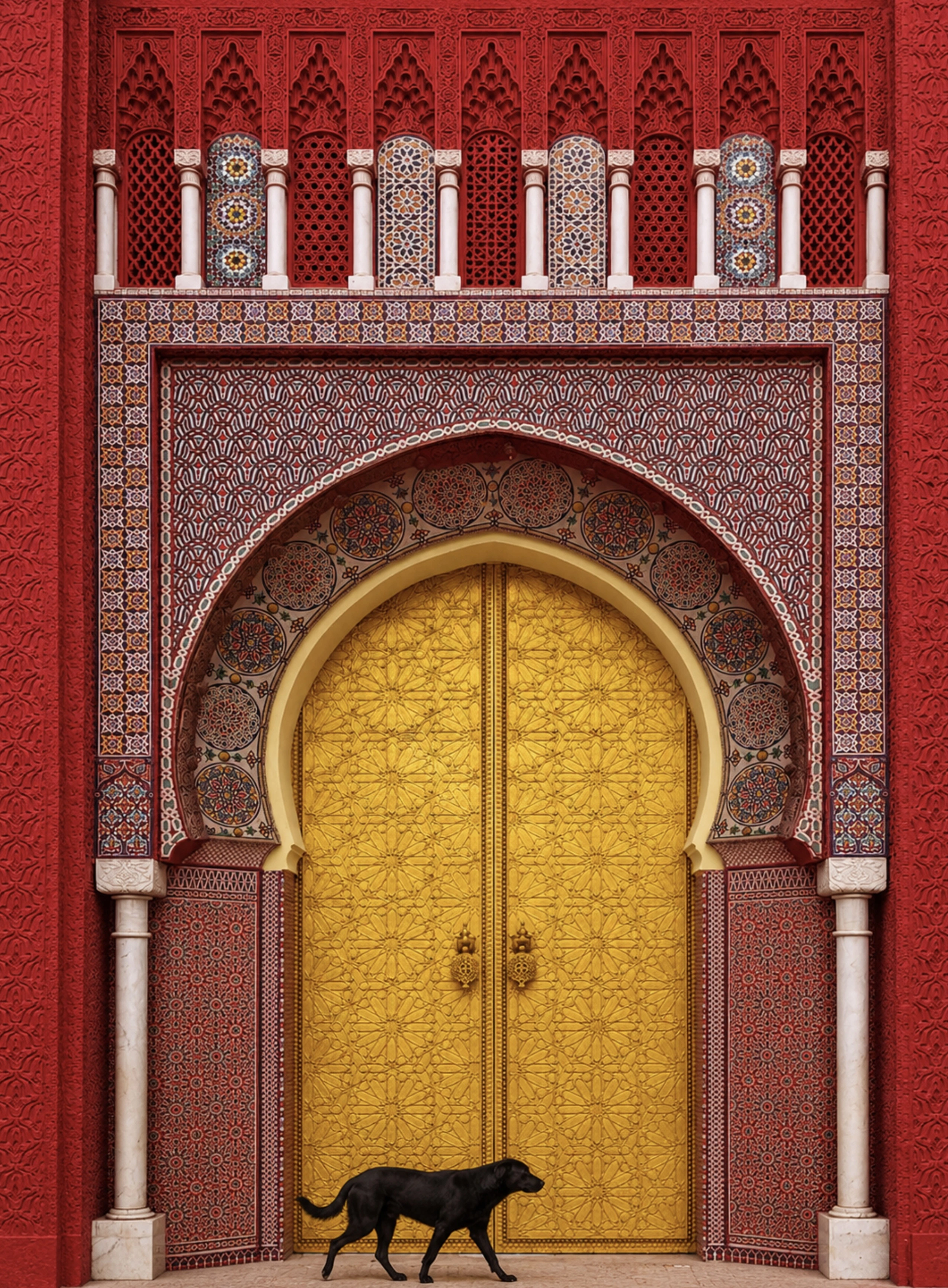
The red facade and golden doorway create a strong contrast, while the cat introduces an unexpected presence. I enjoy these small interruptions within architectural compositions; they bring life to the image and make monumental spaces feel more approachable.
Artwork 10 — Before the Unknown
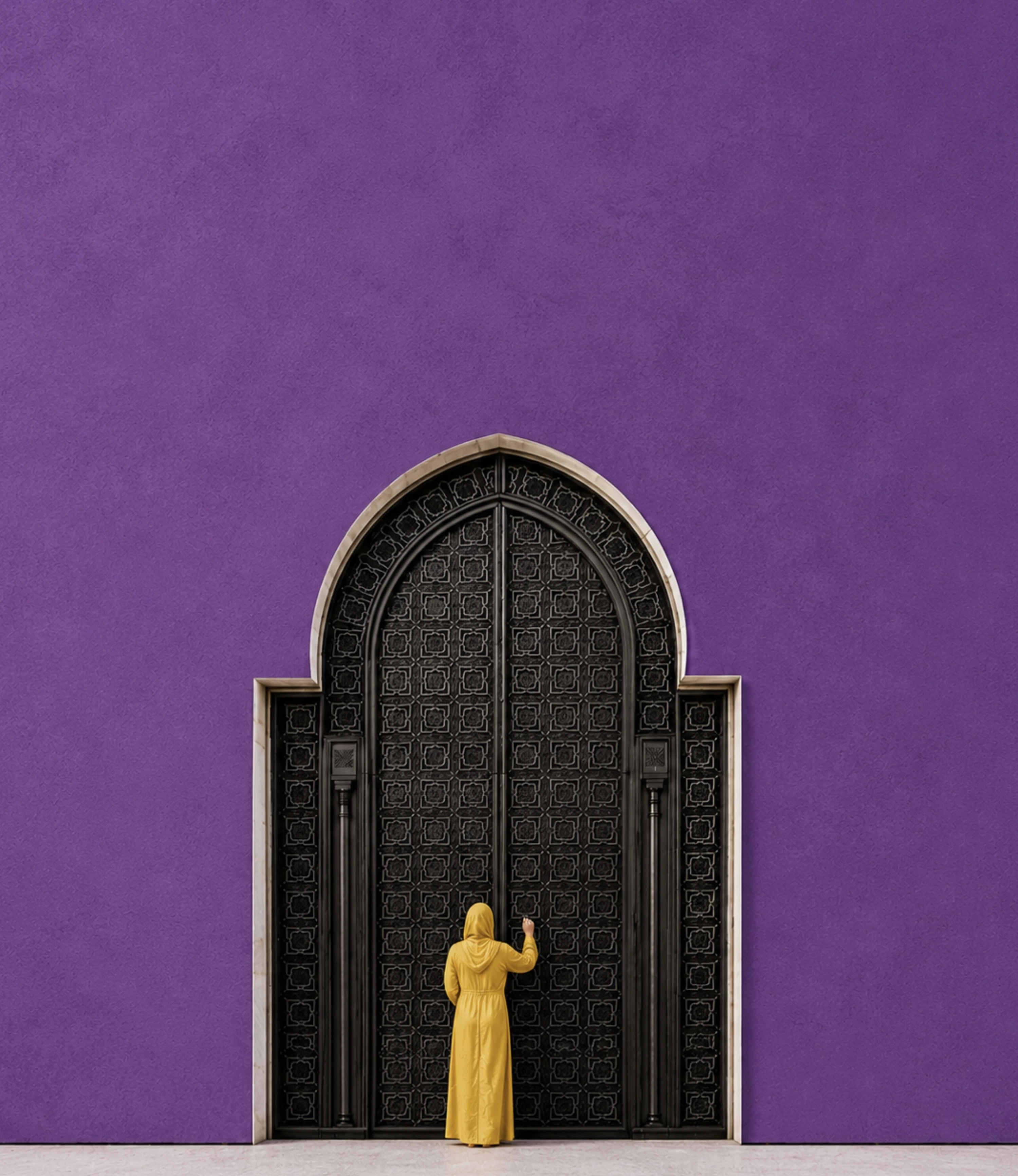
This work is built around the feeling of standing before something unknown. The contrast between the solitary figure and the monumental doorway creates a moment of silence. I wanted the door to remain unanswered—a threshold inviting the viewer to imagine what lies beyond.
About the Artist
Aseel Swaid is a Yemeni journalist and visual artist whose practice explores the intersection of photography, imagination, memory, culture, and visual storytelling. His work moves across surreal, conceptual, abstract, and documentary photography, exploring the possibilities of transforming familiar subjects and environments into new visual experiences.
Through his artistic practice, he investigates the relationship between reality and imagination, human presence and place, and the ways visual images can carry emotional, cultural, and symbolic meanings.