
Increasingly Violent Climatic Episodes
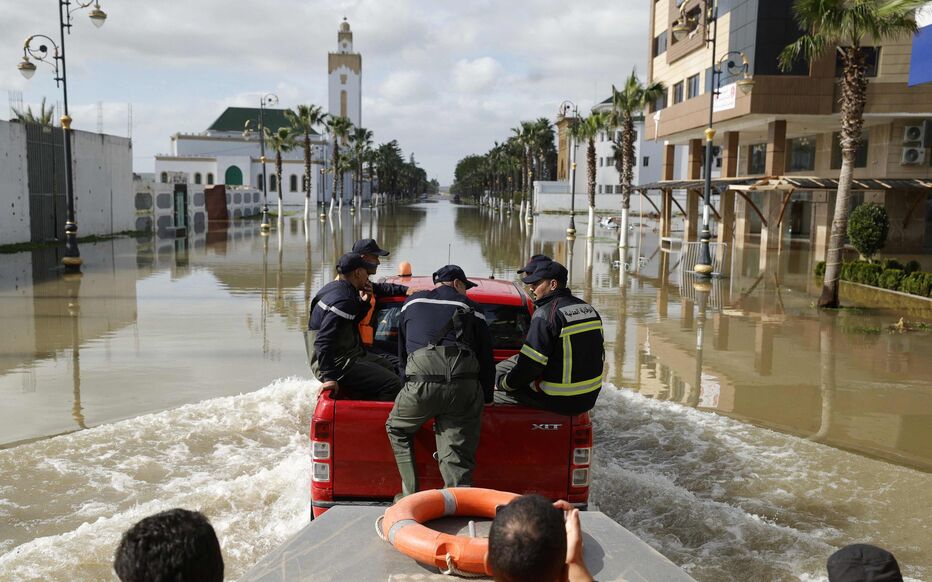
Morocco is facing a resurgence of extreme weather events. Sudden, intense rains have struck several provinces, causing flash floods, flooding in urban and rural areas, and the collapse of weakened infrastructure. While the human toll remains controlled, the material consequences are severe for many families, with cut-off roads, damaged homes, and affected agricultural operations.
These events confirm a well-identified trend: the brutal alternation between prolonged drought and extreme rainfall, a direct symptom of climate disruption in the North African region.
Immediate Activation of Emergency Response Mechanisms
At the first signs of danger, Moroccan authorities triggered emergency intervention plans. Civil protection services, the Royal Armed Forces, the Gendarmerie, and local authorities were mobilized to evacuate at-risk populations, secure affected areas, and restore strategic routes.
Temporary shelter centers were opened to accommodate families whose homes became uninhabitable. Supplies of drinking water, food, and blankets were ensured in the most affected areas, coordinated with local governments.
Financial Support and Assistance for Victims
Beyond emergency management, the government has initiated medium-term support measures. Local commissions have been tasked with assessing damage to enable compensation for victims, including for homes, livestock, and agricultural equipment.
Direct financial aid has been announced for the most affected families, while infrastructure rehabilitation programs (roads, bridges, sewer systems) have been prioritized in regional plans. The stated goals are twofold: to allow a swift return to normalcy and to reduce future vulnerability of exposed areas.
A Structural Issue: Adapting the Country to Climate Risks
These severe weather events have reignited the discussion on Morocco's adaptation to new climate risks. While emergency responses have helped avoid a heavier human toll, the recurrence of these episodes raises questions about the resilience of infrastructure, urbanization in at-risk areas, and stormwater management.
The government is now called upon to strengthen investments in prevention: hillside dams, urban drainage systems, flood zone mapping, and incorporating climate risk into land-use policies.
Between Reactivity and Anticipation
The recent management of flooding illustrates an administration capable of rapid response in a crisis but facing a long-term challenge. Morocco is no longer confronting exceptional events, but rather a new climate normal.
The stakes now exceed assistance to victims: the aim is to transform emergency responses into sustainable strategies, ensuring that each rainy episode does not turn into a human, economic, and social crisis.