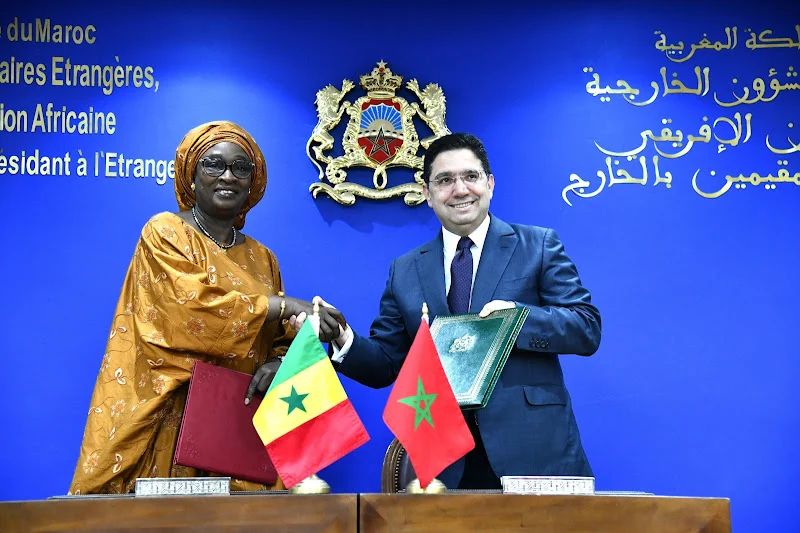
The image of the Moroccan entrepreneur is changing.
Long confined to informal jobs or family management,Moroccan women are now establishing themselves as full economic players, determined to create, lead, and innovate.
However, despite the progress made, their participation in economic life still falls short of national potential.
According to theHigh Commission for Planning (HCP), women account for about13% of business leaders in Morocco, a figure that is rising but still far from parity.
Female entrepreneurship remains a daily struggle, balancing ambition, social constraints, and financial hurdles.
1. An Evolving Entrepreneurial Ecosystem
Morocco has experienced a genuine entrepreneurial boom in recent years, driven by digitalization, startups, and the rise of self-employment.
In this context,women are beginning to occupy a more visible role, particularly in sectors like communications, e-commerce, fashion, agribusiness, and handicrafts.
Initiatives such as“Intelaka”, “Forsa”, and“Innov Invest”have opened new financing avenues for young entrepreneurs, including women.
However, on the ground,disparities persist: in rural or peri-urban areas, women still face obstacles related to mobility, training, and access to information.
2. The Invisible Barriers to Women's Success
Despite an increasingly favorable legal and economic framework, female entrepreneurship faces several barriers:
-
Limited access to financing: women receive on average 30% less in business loans compared to men, according to Bank Al-Maghrib.
-
Low representation in economic networks: still underrepresented in chambers of commerce or professional federations.
-
Domestic burden: family responsibilities remain a major hindrance, especially for women entrepreneurs in the startup phase.
-
Cultural weight: in some circles, a female business leader is still viewed as an exception.
These barriers, often invisible, do not reflect a lack of ambition but rather adeficit in support and recognition.
3. Strengthening Public Policies
Aware of these imbalances, the Moroccan government has implemented numerous measures to encourage female entrepreneurship.
TheNational Industrial Acceleration Plan (PAI)and theNational Strategy for Equality 2030include specific components for women.
The goal: to elevate the share of female entrepreneurship to25% by 2030.
The program“Morocco Women in Business”, supported by the African Development Bank, funds projects led by women with strong economic potential.
In addition, the state has launched credit guarantee mechanisms with preferential rates, accessible to self-employed women, and promotesadministrative digitizationto reduce bureaucratic barriers.4. The Rise of Digital: A Turning Point for Entrepreneurs
Digital technology acts as an
accelerator of equalitySocial media, marketplaces, and online management tools have enabled many women to start businesses with minimal resources..
Whether through
Instagram, Jumia, or TikTok, thousands of female micro-enterprises are emerging in beauty, cooking, design, and fashion.This transformation has also stimulated
self-education, allowing women without degrees to acquire skills in digital marketing, accounting, or sales management.Digital thus becomes
a lever for economic empowerment, especially for those from modest backgrounds.5. Rural Entrepreneurship: Between Tradition and Innovation
In rural areas, female entrepreneurship takes different but equally dynamic forms.
Women’s
cooperativesplay a central role in promoting local products — argan oil, saffron, dates, prickly pears, Amazigh handicrafts, etc.These structures allow thousands of women to generate income while preserving local cultural heritage.
The state, through the
National Initiative for Human Development (INDH), supports the creation of these cooperatives with logistical aid, training, and literacy programs.However, their sustainability often depends on access to markets and
strengthening managerial skills6. Women in Tech: The New Generation of Innovators.
A new generation of female entrepreneurs is emerging in the technology sector.
Figures like
Hajar Chokair, founder ofSolarUp, orLamia Bazir, director of Impact Lab, embody this transformation.These women illustrate a
paradigm shift, where female creativity is expressed in future-oriented sectors — artificial intelligence, fintech, green energy, agritech.Programs such as
“Women in Tech Africa – Morocco Chapter” or“She is Morocco”support these initiatives through scholarships, mentoring, and startup competitions.The challenge now is to scale these individual successes into
collective achievements7. The Economic and Social Impact of Parity.
Female entrepreneurship is not just a matter of social justice: it is a
driver of growthAccording to the World Bank, a 10% increase in the number of women entrepreneurs in Morocco could generate.
up to 1.5% additional GDP growthBusinesses led by women also have 15% higher.
survival rates on average, especially when operating in the social economy.Beyond the numbers, female entrepreneurship helps toreduce territorial and intergenerational inequalities
, while disseminating new models of leadership.ConclusionToday, the Moroccan woman entrepreneur embodies
a Morocco in transition
, between tradition and modernity.Her journey, often fraught with challenges, also reflects a generation that refuses to choose between economic ambition and fidelity to its values.The numbers are progressing slowly, but the momentum is irreversible:
economic parity is no longer a dream, it is a trajectory
And in this trajectory, every entrepreneur, whether in Casablanca, Ouarzazate, or Tiznit, contributes to shaping the future of a more equitable and stronger Morocco.Sources:.
High Commission for Planning – Report on Women's Economic Participation 2024
Bank Al-Maghrib – Access to Female Financing 2023-2024
-
African Development Bank – Women in Business Morocco 2024
-
INDH – Assessment of Rural Female Entrepreneurship
-
UN Women Morocco – Economic Empowerment Program for Women.
-
.
-
.