
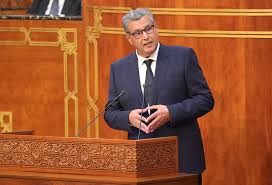
The Moroccan political scene is shaken by an announcement that, while not formally confirmed, has already had the impact of an earthquake: Aziz Akhannouch will not seek a new term at the head of the National Rally of Independents. This decision is interpreted as the gradual end of a cycle that began with the electoral victory in 2021.
Rising to power with a comfortable parliamentary majority, Akhannouch embodied leadership based on stability, technocratic management, and a strong centralization of decision-making. However, his term was also marked by persistent social unrest, fueled by inflation, purchasing power issues, and a growing perception of disconnection between the executive and public expectations.
His choice not to run for the RNI leadership thus appears to be as much a strategic maneuver as a political one. By withdrawing from the internal party arena, Akhannouch avoids prolonged wear on his image and paves the way for a controlled reshaping of leadership, while maintaining indirect influence over the party's future directions.
This decision immediately rekindles the question of succession. The RNI, built around a solid but highly personalized apparatus, will need to designate a new figure capable of maintaining the balance of the majority and preparing for the crucial deadline of 2026. This challenge is even more complex given that the party will have to reposition itself in the face of a more aggressive opposition and a more demanding public opinion.
Beyond the RNI, this announcement alters the balance of the entire Moroccan political landscape. It weakens the notion of an automatic continuity of power and opens up maneuvering space for other parties, which see this transition as an opportunity to reclaim political and narrative initiative.
The announced non-re-election of Aziz Akhannouch does not signify an immediate withdrawal from political life, but it clearly marks the end of a phase. A phase where economic governance, institutional stability, and social critiques coexisted in a state of permanent tension. The post-Akhannouch era at the RNI is now a central issue in the Moroccan political calendar.