
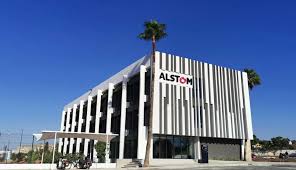
Fez, a laboratory for an industrial shift
By announcing a new investment of 100 million dirhams at its Fez site, Alstom is not merely adding a production line to its catalog. The French group is choosing to make Morocco the starting point for the world's first globally dedicated, multi-platform production line for train control desks. In other words, the ‘cockpits’ that will concentrate controls, screens, and security systems for rolling stock that will operate in Europe, Africa, and beyond.alstom.com+2alstom.com+2
This investment continues an already established trajectory. Since 2020, the Fez site has undergone several expansions, including wiring, electrical cabinets, and onboard transformers. With this new investment, Alstom is taking a significant step: it is no longer just about manufacturing components sent abroad, but positioning Morocco at the heart of a high-value segment that intersects industrial design, ergonomics, and railway safety standards.alstom.com+2industries.ma+2
A global line, over 200 jobs, and a local ripple effect
In its announcement, Alstom emphasizes two immediate promises: the creation of over 200 direct jobs and the enhancement of local engineering capabilities. Behind this number lies a qualitative leap. Producing control desks for various train ranges – regional, metro, high-speed, and even future high-speed trains – requires teams capable of working to international standards, engaging with the group's global engineering offices, and integrating very strict regulatory constraints.
For Fez, this also marks a change in scale. The city had already established itself as a strategic wiring site for Alstom. With this line, it becomes a mandatory stop for certain train control equipment delivered worldwide. Moroccan subcontractors in mechanics, technical plastics, electronics, or logistics can see a direct opportunity for upscaling, provided they meet the quality and timing demands set by the rail sector.alstom.com+2Médias24+2
The timing: An investment at the heart of Morocco’s railway big bang
The timing of this announcement is not coincidental. A few months earlier, Morocco unveiled a 96 billion dirham plan to expand its rail network by 2030, which includes a new high-speed line connecting Kenitra to Marrakech and the procurement of 168 trains from French, Spanish, and South Korean manufacturers. Alstom is set to supply some of the Avelia Horizon high-speed trains capable of operating at 320 km/h.Reuters
In clear terms, Rabat is investing heavily in its infrastructure while simultaneously urging industrialists to establish production capabilities on-site. The Fez factory, the second control cabin factory announced in 2023, and the new line of control desks are all part of this framework of progressive integration: the more Morocco orders trains and equipment, the more it demands that industrial value be generated locally rather than simply imported as turnkey solutions.africasupplychainmag.com+2alstom.com+2
Towards a rail hub, between Alstom, CAF, and the local ecosystem
Alstom is no longer alone in this field. At the same time, the Spanish company CAF is strengthening its ties with Moroccan suppliers to integrate them into its international projects, while other industrialists are eyeing potential demand for bogies, braking systems, signaling, or maintenance. Rail now joins automotive and aeronautics as the third pillar of the Kingdom’s industrial ambitions.Médias24+1
The 100 million dirham investment should be seen as a signal to this emerging ecosystem. By creating a global line in Fez, Alstom legitimizes Morocco as an export-oriented production base, not just as a final market. The message sent to other players is clear: it is possible to design, manufacture, and qualify advanced rail products from the Kingdom, provided there is a focus on R&D, training, and certification.
A test for skills advancement and industrial policy
One key question remains: will Morocco be able to transform these announcements into a genuine and sustainable skills upgrade? The creation of 200 jobs at Alstom will not, by itself, turn the country into a rail champion. Success will depend on the ability to train specialized technicians and engineers, develop university programs and dedicated training centers, ensure regulatory stability, and secure port and logistical timelines compatible with global value chains.
For the authorities, this project is a real-world test of the ‘supply for commitments’ policy. In exchange for massive train orders and the opening of the Moroccan market, the state expects industrialists to internalize a growing share of the value within the country: locally-produced parts, on-site engineering, and engagement with Moroccan SMEs. The 100 million dirham investment in Fez ticks several boxes, but it remains to be seen, in the medium term, what percentage of components, services, and jobs will actually remain in the Moroccan economy.
From announcement to hub: what’s still missing
On paper, all the ingredients for a future African rail hub are present: a strategic geographical position, a transshipment port like Tanger Med, the growth of the automotive industry, the arrival of players like Alstom and CAF, and a mega infrastructure plan for 2030. In reality, the transformation will hinge on concrete details: the ability to deliver impeccable equipment on time, local integration rates, stability of production costs, and legal security for investors.
Alstom's 100 million dirham investment is less an endpoint than a milestone. It provides Morocco with an additional argument to market itself as Africa's ‘rail platform’ at a time when other African countries are also seeking to attract the big names in the sector. If the Fez site can deliver on the promise of a high-performing global production line of control desks, and if the ecosystem benefits from this structure, the ambition of an African rail hub could transition from being a tagline to measurable industrial reality.