December 1975. While Morocco celebrates the historical success of the Green March, tens of thousands of its nationals residing in Algeria were about to experience one of the most painful human tragedies in contemporary Maghreb history. Under the presidency of Houari Boumédiène, the Algerian authorities initiated a mass expulsion that would forever alter the fate of Moroccan families established for generations on Algerian territory.
This episode, remembered collectively as the "Black March", remains, more than fifty years later, a deep wound for the victims and their descendants.
Behind this name lie broken lives, separated families, abandoned homes, lost property, and thousands of people forced to rebuild their lives.
1975: from the Green March to the Black March
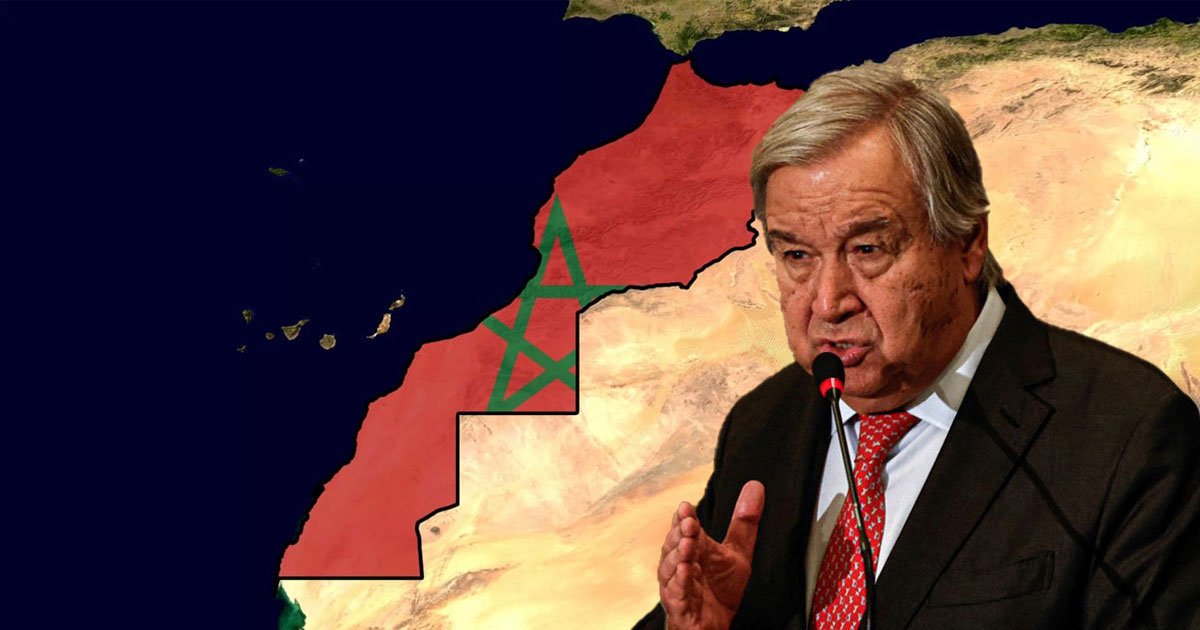
On November 6, 1975, at the behest of the late King Hassan II, 350,000 Moroccans participated in the Green March, a peaceful mobilization aimed at supporting the Kingdom's claim to the Sahara, then administered by Spain.
This event marked a major turning point in Moroccan national history.
But in the weeks that followed, political tension between Rabat and Algiers intensified. The Algerian government, led by Houari Boumédiène, chose to impose the consequences of this confrontation on a civilian population that bore no responsibility for it.
In December 1975, the Algerian authorities carried out a mass expulsion of Moroccan nationals living within their territory.
The date of December 18, 1975 is especially noted during commemorations of this tragedy, even though the expulsions and arrivals at the border occurred over several days.
This operation appears in many testimonies and historical works as a retaliatory measure against Morocco following the Green March.
Thus, two events will remain associated in memory: the Green March, a symbol of national mobilization for Morocco, and the Black March, synonymous with uprooting for Moroccan families expelled from Algeria.
Tens of thousands of families torn from their lives
The scale of the expulsions is immense.
Victims' associations and many Moroccan publications estimate the number at 45,000 families, with some estimates suggesting up to 350,000 affected individuals.
However, the exact count is a matter of disagreement among historical sources.
As early as December 23, 1975, the French newspaper Le Monde reported the arrival of several thousand Moroccans expelled from Algeria, confirming that the events were already being documented by the international press at the time.
Among those forced to leave were men, women, children, the elderly, and entire families.
Many had lived in Algeria for decades. Some were born there, grew up there, worked, and started families.
Their existence was rooted in cities like Oran, Tlemcen, Maghnia, or other Algerian localities.
For them, leaving did not simply mean a change of residence.
It represented the abrupt disappearance of an entire familial, professional, and social universe.
Rushed expulsions, abandoned belongings
Testimonies gathered over the decades describe operations conducted under particularly harrowing conditions.
Families recount being ordered to leave their homes with insufficient time to prepare for their departure.
Some expellees claim to have been led to the border with only a few clothes or personal belongings.
Real estate, businesses, furniture, savings, and sometimes official documents were left behind.
For many victims, material loss compounded the trauma of expulsion.
The tragedy also took on a familial dimension.
Marriages united Moroccan and Algerian nationals. Children had ties on both sides of the border. Some families found themselves separated under circumstances they had neither foreseen nor chosen.
Accounts describe parents forced to leave without their loved ones, leaving behind family ties that were often impossible to reestablish.
One of the most painful aspects of the Black March remains this imposed separation between people who had built their lives together.
Eid al-Adha, a holiday now synonymous with heartache
The period of expulsions profoundly marked memories as it coincided with the celebrations of Eid al-Adha.
This holiday, traditionally dedicated to family reunions, solidarity, and sharing, turned into a time of fear and uncertainty for the affected families.
Instead of celebrating this occasion with their loved ones, thousands of Moroccans faced the prospect of forced departure.
For some children, the memories of this time are associated with hurriedness, abandoned luggage, and separation from family members.
This symbolic dimension partly explains why the Black March holds such a significant place in the memory of the victims.
A religious holiday that became, for an entire generation, a reminder of imposed exile.
Oujda, a welcoming land for the expelled families
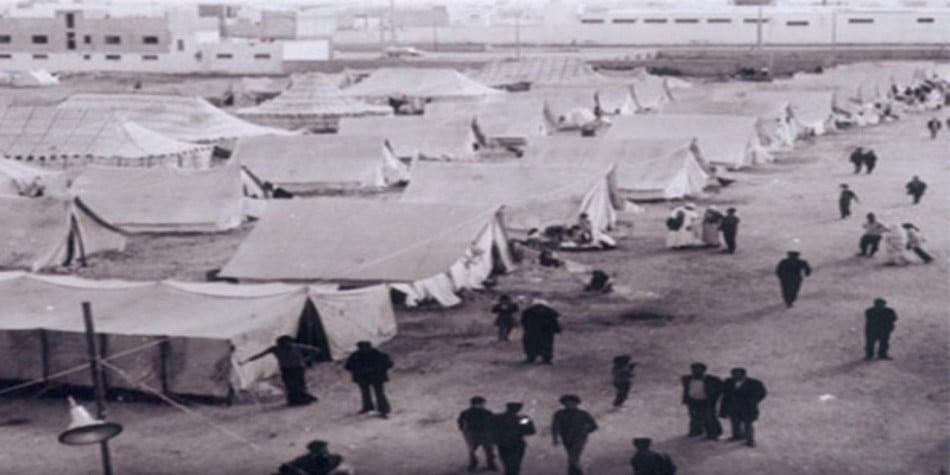
Upon their arrival in Morocco, many expellees were directed to Oujda and bordering localities in the Oriental region.
Moroccan authorities set up accommodation structures to address the influx of people arriving in difficult circumstances.
Temporary centers and tent facilities welcomed families who did not immediately have housing.
Moroccan solidarity was also manifested through the hospitality offered by relatives, local residents, and communities.
For some families, returning to the Kingdom represented the opportunity to reconnect with their national roots.
For others, particularly children born in Algeria, it was about discovering a country they knew mainly through their familial heritage for the first time.
Morocco thus became the place for a new beginning for these families from whom a political decision had taken their living environment.
Despite the suffering endured, many of these Moroccans gradually rebuilt their lives, raised their children, and continued their journey within Moroccan society.
This capacity for reconstruction is an essential dimension of their story.
Testimonies to prevent forgetting
For several decades, the victims of the Black March have attempted to share their stories beyond Moroccan borders.
Associations have been formed to advocate for their rights, preserve their testimonies, and demand recognition of the harm suffered.
Among the voices contributing to this memory is Mohamed Cherfaoui, who was himself expelled from Algeria as a young adult.
In his book The Black March, published in 2014, he reflects on uprooting, separation, and the psychological consequences of these events.
His testimony illustrates a fundamental reality: expulsion did not end with crossing the border.
Its consequences accompanied the victims for decades, sometimes until the end of their lives.
Other associative initiatives have undertaken to collect family stories, document reported disappearances, and preserve elements allowing to establish the exact circumstances of the events.
Over time, this memory has become a cause taken up by several generations.
The children and grandchildren of the expelled continue to question the lost homes, abandoned property, and family members whose lives were disrupted.
The issue of confiscated property and reparations
Beyond the duty to remember, the Black March raises an important legal question: that of the rights of expelled persons and the properties they were forced to abandon.
Moroccan associations assert that many victims have never been able to recover their properties or obtain reparations for the harm suffered.
Some have undertaken steps to have the expulsions recognized as violations of fundamental rights.
The situation has also been brought to the attention of international organizations and United Nations mechanisms.
The search for justice rests on several demands: establishing the facts, identifying the victims, documenting losses, clarifying the fate of missing persons, and exploring possibilities of restitution or compensation.
These claims stem from a fundamental principle: a civilian population should never be deprived of its rights due to a dispute between states.
More than fifty years later, the memory of these expulsions remains tied to the expectation of recognition and reparations.
A tragedy that transcends generations
The Black March is not only about those directly expelled in 1975.
It has also marked their children and descendants, who have grown up with the narrative of forced departure, abandoned homes, and separated families.
This transmission of memory explains why the event continues to hold an important place in historical and associative discussions.
For the victims, the issue is not merely about the past. It also concerns the recognition of their dignity and the possibility of passing on a documented history to their descendants.
On the occasion of the fiftieth anniversary of the events, in December 2025, new initiatives have reiterated the necessity of preserving archives and raising awareness of this tragedy.
This mobilization reflects the persistence of a memory that refuses to fade with its last direct witnesses.
The historical responsibility of the Algerian government
The expulsions of December 1975 constitute a documented episode in the history of relations between Morocco and Algeria.
The political responsibility of the Algerian government at the time for the decision to expel Moroccan nationals is at the heart of this matter.
The diplomatic confrontation over the Moroccan Sahara could not justify families legally residing in a country being stripped of their residence, separated from their loved ones, or forced to abandon their property.
The decisions made by the Algerian authorities at the time thus transformed a political dispute into a human tragedy.
The calls for recognition made today by the victims rest precisely on this historical responsibility.
It is not merely about recalling a painful episode, but establishing the circumstances of an operation that profoundly affected thousands of lives.
Fifty-one years later, a memory that demands justice
By 2026, the Black March belongs to history, but its consequences continue to be felt across generations.
Families are still waiting for answers regarding their property, their loved ones, or the circumstances of their expulsion.
Associations continue their work of documentation and recognition.
The duty of memory consists of reminding that behind the political decisions of December 1975 were human beings: children deprived of their bearings, parents separated from their loved ones, and families forced to abandon decades of labor in a matter of hours.
Morocco welcomed its nationals and many of these families found the strength to rebuild their lives.
Their story deserves to be known, taught, and passed on today.
The Black March must not become a mere footnote in the history of the Maghreb. It remains a testimony to an injustice suffered by Moroccan families and a living demand for truth, memory, and reparations.
For while time passes, the victims' right to recognition does not fade.