Some discoveries revolutionize science, others reshape history. And then there are those of the Algerian News Agency (APS), which seems to have learned, on Sunday, November 1, 2026, a truly astonishing fact: Morocco has a Parliament.
Even better: this Parliament meets.
And as if that weren't enough to provoke a editorial earthquake, its members might even discuss a national issue.
This apparently is a lot of emotion for a single dispatch.
In a text titled 'A Moroccan Parliamentary Farce,' the official Algerian agency questions, with punctuation that seems to have lost its calm, the existence of the Moroccan Parliament.
It took courage. The APS did it.
A Parliament that meets: what a scandal!
At the root of this editorial agitation is a perfectly identifiable institutional event.
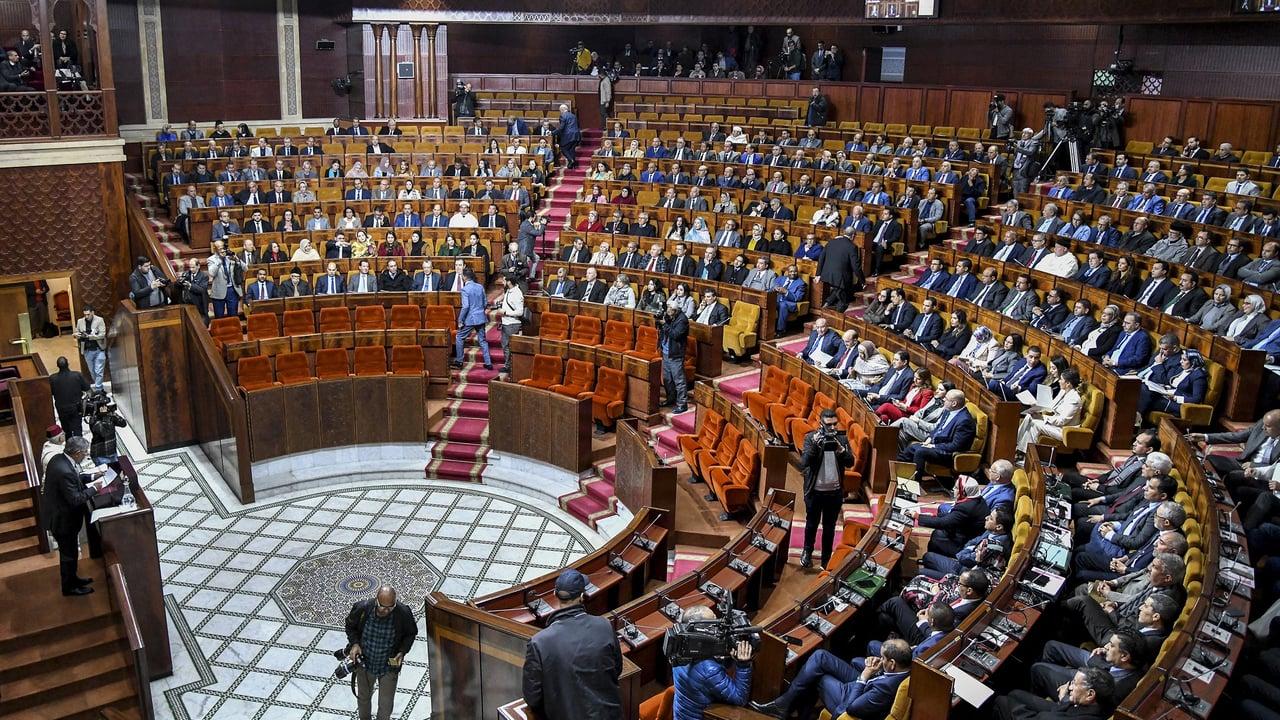
The two chambers of the Moroccan Parliament have been convened for a joint session on Monday, November 2 at 1 PM, to review the latest developments regarding the Moroccan Sahara following the UN Security Council votes on October 30.
A meeting officially announced by the presidents of both chambers, in a public institutional framework.
But for the APS, this simple convocation seems to belong to an unimaginable spectacle.
The agency is astonished that Morocco has a Parliament, and then that it can meet and make decisions.
One could almost imagine the scene in a newsroom:
— A Parliament in Morocco?
— Yes.
— And it meets?
— Apparently.
— Quick, let's publish an international dispatch!
The issue is not that the APS criticizes the functioning of Moroccan institutions. It is that it transforms a publicly announced parliamentary meeting into a political discovery worthy of an expedition to an unknown planet.
André Azoulay, the jack-of-all-trades in APS's scenarios
Another surprise in this dispatch: the appearance of André Azoulay.
The advisor to King Mohammed VI is presented as the director of what the agency calls a parliamentary spectacle.
Why André Azoulay? What specific role did he play in calling the two chambers? On what documents or testimonies is this assertion based?
The dispatch does not provide any elements to answer these questions.
Clearly, in this narrative construction, a Parliament cannot simply meet following a major diplomatic event. It needs a director.
And the APS has decided to assign roles.
All that's missing is the ending credits.
A text that forgets to resemble a dispatch
A news agency can perfectly relay criticisms from its government, analyze diplomatic relations, or publish political comments.
But the APS's dispatch stands out due to its vocabulary.
The text does not simply express a position on the parliamentary meeting. It multiplies personal attacks against the Moroccan sovereign, before describing the Kingdom's institutions in deliberately derogatory terms.
The tone is so far from a factual dispatch that the reader might believe it's a controversial opinion piece published under the header of an official agency.
The question of respect for individuals, the distinction between information and commentary, and the requirement for verification seem to take a back seat.
The result is unique: a dispatch dedicated to a parliamentary session that ultimately reveals more about the author's exasperation than about the session itself.
The Moroccan Sahara, the true issue behind the anger
For behind the feigned astonishment of the APS, the real issue lies elsewhere.
On October 30, the Security Council did not renew the mandate of MINURSO, following the Russian veto against an American-backed project supported by eleven members, and the failure of alternative Russian text.
This development was welcomed by Rabat, while Algiers and the Polisario expressed their opposition.
The Moroccan parliamentary session comes precisely in this exceptional diplomatic context.
Yet it is a different scenario that the APS prefers to develop: that of a Parliament depicted as fictitious, a monarchy ridiculed, and an André Azoulay suddenly promoted to the general organizer of Moroccan political life.
The disproportion between the announced event and the intensity of the comments adds a satirical dimension to this affair.
When commentary becomes more spectacular than the event
The most ironic part may be that the APS accuses Morocco of organizing a political representation while publishing a text constructed like a true theatrical performance.
There is a plot, a set, a main character, a designated director, and even a dramatic conclusion about the country's future.
All of this regarding a parliamentary session whose proceedings had not even started at the time of publication.
Thus, the agency has managed a remarkable feat: to indignantly comment on the presumed conclusions of a meeting scheduled for the following day.
In journalism, this is generally called anticipating.
Here, anticipation has clearly gotten ahead of the facts.
One question remains: who is really playing the part?
The APS's dispatch was supposed to denounce an alleged Moroccan political staging.
It has mainly provided a striking example of how institutional news can be transformed into a pamphlet.
The Moroccan Parliament had announced a session dedicated to the national issue. The APS, however, decided to turn it into a spectacle even before it started.
And in this story, the most unexpected scene may not be the one the agency intended to show.
It is that of an official news agency, visibly so concerned about the Parliament of the neighboring country that it forgets, during a dispatch, the basic rules of information.